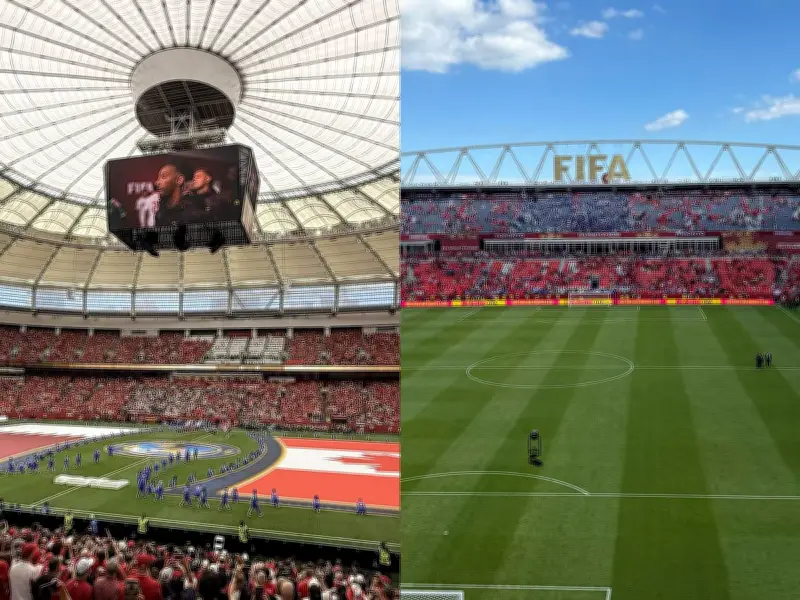
The rivalry between Vancouver and Toronto is one of Canada's oldest debates. From Canucks versus Maple Leafs to arguments over skyline and nightlife, fans rarely agree. Now, the World Cup has added a new chapter to this competition. As Canada's two host cities share the spotlight, FIFA spectators are comparing everything from stadium views and weather protection to walkability and scenery. Here is why Vancouver is coming out on top.
1. B.C. Place Scores Points with Fans
For fans who have experienced both host cities, one main difference is the stadium itself and how it shapes match day. Mike Lee, 46, noted the contrast. “Vancouver was definitely the flagship venue for Canada in this tournament,” he said. Toronto’s BMO Field had a temporary expansion of about 17,000 seats to meet FIFA requirements, but it remains the smallest venue in the Cup. Lee, seated in the second-level balcony for Canada versus Bosnia-Herzegovina, said some seats had limited views. “Our views were partially obstructed. We had to stand up for most of the game to see it properly.” By comparison, B.C. Place offers a circular bowl design with better sightlines and a closer viewing experience. It seats 52,497 fans versus 43,036 at BMO Field. “The enclosed stadium also created a more electric atmosphere. The crowd noise felt much louder,” Lee added.
2. Rain Delays in Toronto, Smooth Sailing in Vancouver
In Toronto, rainy weather has dampened parts of the World Cup experience. The opening day of the FIFA Fan Festival was cancelled due to lightning, forcing an evacuation of fans watching Mexico play South Africa at Fort York, even though it was promoted as a “rain-or-shine” event. The next day, the festival opened two hours late due to rain. In Vancouver, the Fan Festival at Hastings Park has proceeded without weather interruptions. B.C. Place has a retractable roof that keeps fans dry and comfortable. In contrast, Toronto’s stadium is uncovered. “It was so hot during the Canada versus Bosnia-Herzegovina match that I found it hard sitting in the sun for the whole game,” Lee said.

3. In Vancouver, the Walk Is Part of the Party
Fans say one big difference is how easy it is to get around on match day. Vancouver’s compact downtown and efficient transit make it simple to walk from the SkyTrain to B.C. Place, passing through lively streets filled with fans. Toronto, with its larger sprawl and less centralized fan zones, can require longer walks or multiple transfers. The walk in Vancouver becomes part of the festive atmosphere, with street performers and food vendors adding to the experience.
4. Scenic Backdrop Adds to the Experience
Vancouver’s natural beauty, with mountains and ocean views, provides a stunning backdrop for the World Cup. Fans can enjoy the scenery while moving between venues and fan zones. Toronto, while offering its own urban appeal, lacks the dramatic natural setting that makes Vancouver memorable. This scenic advantage enhances the overall visitor experience and leaves a lasting impression on international guests.
From stadium design and weather protection to walkability and scenery, Vancouver offers a superior World Cup experience. While Toronto has its strengths, these four reasons show why Vancouver is the better host city for this global event.