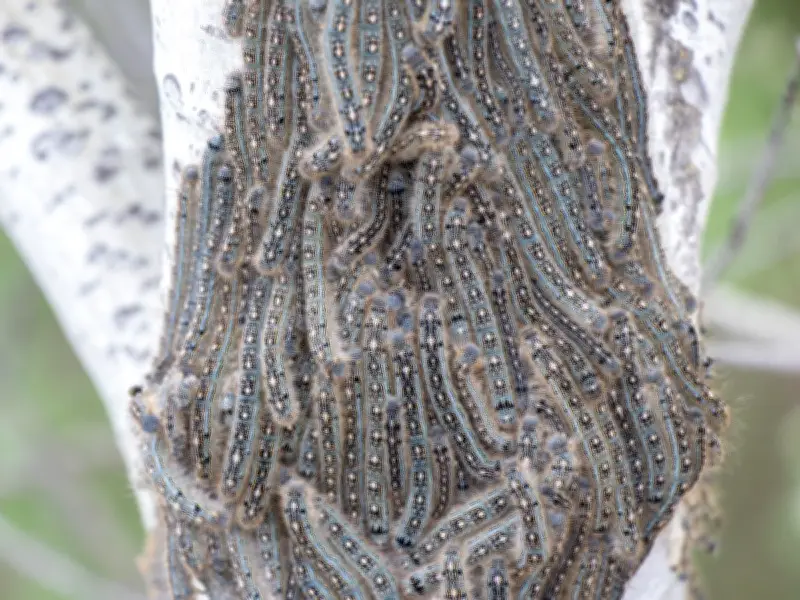
Hundreds of thousands, perhaps millions, of forest tent caterpillars are currently crawling through Edmonton's branches, all hungry for poplar leaves. These native insects are in the midst of their seasonal emergence, and while they may appear creepy, they are essentially harmless and play a beneficial role in the forest ecosystem.
Native Species with a Distinct Look
Forest tent caterpillars, scientifically known as Malacosoma disstria, are native to the Edmonton area. They are easily identified by a distinct row of whitish spots running down their backs and wide blue bands along their sides. According to Mike Jenkins, senior scientist for the City of Edmonton, the caterpillars have emerged from their egg cases and are moving onto poplar leaves, where they grow in clusters.
“They’ve emerged from their egg cases and they’re moving out on to the leaves of the poplar trees and growing from there and they kind of start off in little clusters. You’ll see a big patch of them sitting on the trunk of the tree all together,” Jenkins told Postmedia.

From Caterpillar to Moth
Unlike their Eastern tent caterpillar cousins, forest tent caterpillars do not build silken tents. Instead, they seek out locations such as trees, fences, garages, or houses to spin a cocoon. “They spin themselves sort of a little silken pierogi and pupate inside there for about a week or so,” Jenkins explained. After about a week, a small, chunky brown moth emerges around the end of June. These moths are attracted to bright lights and can form large swarms, where they mate. Many become food for birds, bats, reptiles, amphibians, and small mammals.
The moths lay bands of eggs on the tips of poplar branches, resembling tiny black beads that overwinter and hatch into a new generation of caterpillars the following spring.
Natural Population Control
When caterpillar numbers become too high, natural predators help regulate the population. Ground beetles, which normally forage on the ground for slugs, grubs, and cutworms, climb trees to feast on caterpillars. Ants, parasitic flies, and wasps also prey on them. “There are birds that actually expand their range to take advantage of some of those outbreaks — red-eyed vireos we don’t usually see in very large numbers around here, but when there’s an outbreak of forest tent caterpillar, they end up moving in to take advantage of that food source,” Jenkins said.
Additionally, a virus called nuclear polyhedrosis acts as a body-snatcher, liquefying the caterpillars' insides and causing them to hang dead from trees. “Then if anything touches them, they kind of burst open and spray virus-laden goo all over all the rest of the caterpillars and spread the virus that way,” Jenkins noted. This natural cycle helps balance the ecosystem, returning nutrients from the trees to the soil as caterpillar frass.
Impact on Trees and Humans
While the caterpillars can defoliate poplar trees, healthy trees typically recover. However, trees already suffering poor health may be more vulnerable. The writhing masses can also make bike paths slippery and hazardous. Jenkins cautions that the current outbreak is part of a 10-to-15-year cycle in Edmonton, with numbers rising year after year.
Despite the temporary nuisance, forest tent caterpillars are a natural and important part of the local ecosystem, contributing to nutrient cycling and providing food for wildlife.