Scientist Intrigued by Strange Ice Formation Spotted Outside Winnipeg
By Charles Lefebvre
Published: April 08, 2026 at 1:24 PM EDT
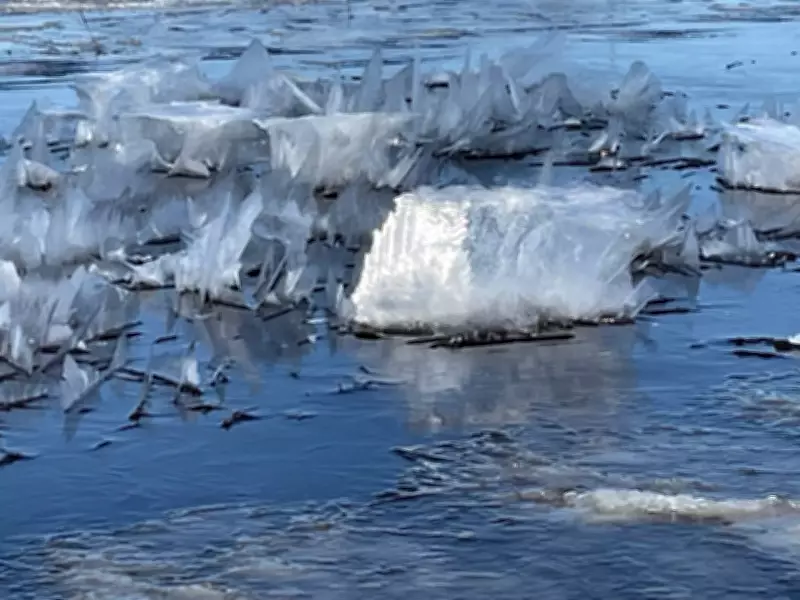
A University of Manitoba scientist is delving into the mysterious cause of a peculiar ice formation discovered on Pipeline Road in Winnipeg, capturing the attention of locals and researchers alike. This unusual natural phenomenon has prompted a detailed scientific inquiry to understand its origins and implications.

Unraveling the Mystery
The ice formation, which appeared unexpectedly, has sparked significant interest due to its unique structure and location. According to the scientist from the University of Manitoba, preliminary investigations suggest that specific environmental conditions, such as temperature fluctuations and moisture levels, likely contributed to its development. The formation is not typical of regular winter ice patterns, raising questions about underlying geological or climatic factors.
Key observations include its crystalline shape and placement, which differ from common ice accumulations in the area. The scientist emphasized that further analysis is needed to confirm the exact mechanisms at play, but initial hypotheses point to a combination of natural processes that may be influenced by local weather anomalies.
Scientific Significance and Local Impact
This discovery holds potential importance for understanding regional ice dynamics and climate patterns. The University of Manitoba researcher highlighted that studying such formations can provide insights into how ice behaves under varying conditions, which is relevant for fields like environmental science and Arctic studies. Additionally, it underscores the need for ongoing monitoring of natural phenomena in urban and rural settings.
Local residents have expressed curiosity and concern, with some reporting similar sightings in past years. The scientist plans to conduct more in-depth field studies, possibly involving sample collection and data logging, to build a comprehensive model of the formation's genesis. This effort aligns with broader academic research initiatives aimed at exploring Canada's diverse environmental features.
As investigations continue, the scientific community remains engaged, viewing this as an opportunity to enhance knowledge about ice formations and their ecological contexts. The findings could contribute to future research on climate change effects and natural resource management in Manitoba and beyond.