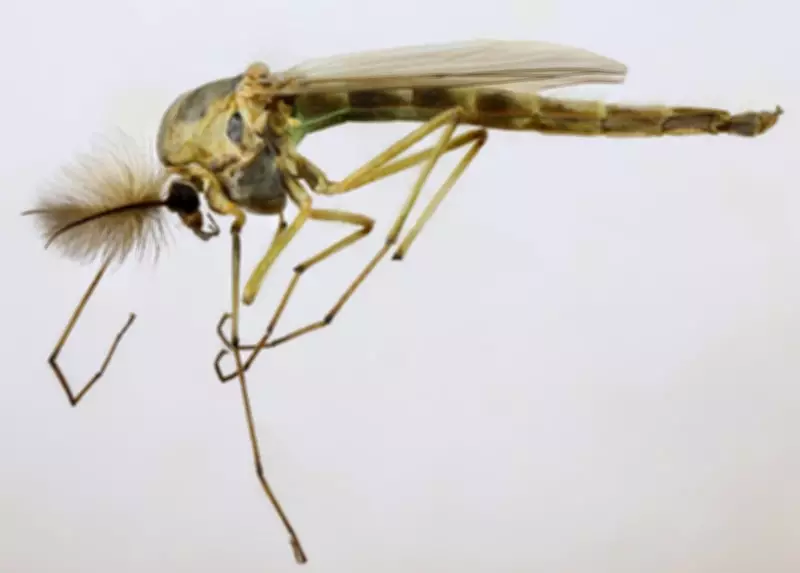
Torontonians may have noticed an unwelcome but harmless phenomenon: swarms of tiny flying insects known as midges are back in the city. These non-biting midges, belonging to the family Chironomidae, are a common sight in late spring and early summer, particularly near bodies of water.
What Are Midges?
Midges are small, delicate insects often mistaken for mosquitoes. However, unlike mosquitoes, adult non-biting midges do not feed on blood. They have vestigial mouthparts and live only for a few days, primarily to mate and reproduce. According to The Canadian Encyclopedia, nearly 800 species of Chironomidae live in Canada, with Chironomus plumosus being one of the most widespread.
Why Do They Swarm?
Male midges form large mating swarms in the evenings, typically around dusk. These swarms can appear as clouds of tiny insects near trees, streetlights, or over water. The swarming behavior is a reproductive strategy: females fly into the swarm to select a mate. After mating, females lay eggs in water, where larvae develop.

Are Midges Harmful?
Midges are considered a nuisance but pose no direct threat to humans. They do not bite or transmit diseases. However, their sheer numbers can be annoying, and dead midges can accumulate on surfaces, causing minor cleanup issues. They are also known to trigger allergic reactions in some sensitive individuals, such as itchy eyes or sneezing.
How Long Will They Last?
The midge season in Toronto typically lasts from late April through June, with peak swarming occurring in May. The duration depends on weather conditions; warm, calm evenings are ideal for swarming. Once temperatures rise consistently above 25°C, midge activity usually decreases.
While midges may be an inconvenience, they are a natural part of the local ecosystem. They serve as an important food source for birds, bats, and other insects. Experts advise residents to keep windows closed during peak swarming hours and to use screens to prevent them from entering homes.