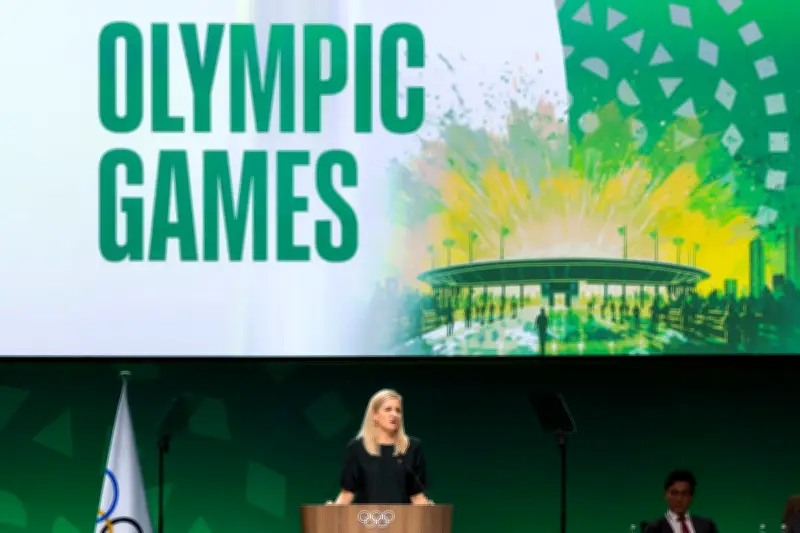
The International Olympic Committee (IOC) has officially declined requests from Greenland and the Faroe Islands to compete as independent Olympic teams, reaffirming that their athletes must continue to participate under the flags of Denmark or other recognized National Olympic Committees (NOCs). The decision, announced during the 146th IOC Session in Lausanne, Switzerland, on June 24, 2026, was communicated by IOC President Kirsty Coventry.
IOC Cites Existing NOC Framework
According to the IOC, the applications from Greenland and the Faroe Islands were rejected because both territories are already represented by the Danish NOC. The IOC Charter stipulates that only one NOC per country or territory is recognized, and exceptions are rare. “The IOC recognizes the National Olympic Committee of Denmark as the sole NOC for the Kingdom of Denmark, which includes Greenland and the Faroe Islands,” Coventry stated. “Therefore, athletes from these regions must qualify and compete under the Danish flag.”
Greenland, an autonomous territory within the Kingdom of Denmark, has sought greater international sporting recognition, particularly in disciplines like handball and skiing. The Faroe Islands, a self-governing archipelago under Danish sovereignty, have also pushed for independent participation in events such as football and swimming. However, the IOC maintains that granting team status would set a precedent leading to fragmentation of the Olympic movement.

Impact on Athletes and Future Prospects
The decision means that athletes from Greenland and the Faroe Islands will continue to compete for Denmark at the Olympic Games. Some athletes have expressed disappointment, arguing that separate representation would boost local sports development and visibility. “We have talented athletes who could inspire a new generation if they competed under our own flag,” said a spokesperson for the Greenland Sports Confederation. “But we respect the IOC’s decision and will work within the current system.”
This is not the first time the IOC has rejected such requests. Similar bids by territories like Puerto Rico, which competes independently, and the Cook Islands, which has its own NOC, have been evaluated on a case-by-case basis. The IOC emphasized that any change to the current structure would require a two-thirds majority vote during an IOC Session, a threshold that has not been met.
Broader Context of Olympic Representation
The issue of territorial representation in the Olympics is complex. Currently, 206 NOCs are recognized, including some non-sovereign entities like Hong Kong and Palestine. However, the IOC has historically been cautious about expanding the list. “The Olympic Games are about uniting the world through sport, but we must also respect the existing geopolitical framework,” Coventry added. “We encourage Greenland and the Faroe Islands to continue developing their athletes through the Danish NOC.”
Both territories have the option to pursue observer status or seek recognition from international federations for specific sports, which could eventually lead to independent participation in events like the World Championships. For now, however, their Olympic aspirations remain tied to Denmark.