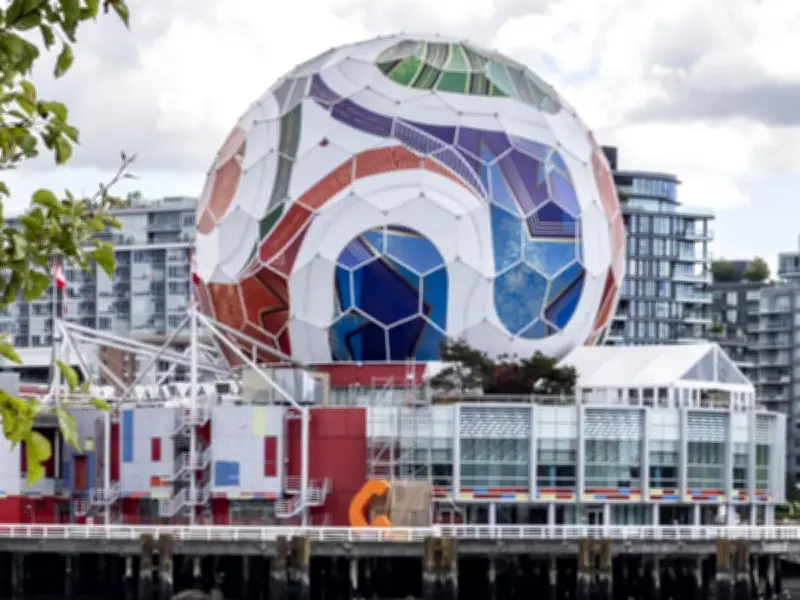
The transformation of Science World's geodesic dome into a giant soccer ball for the 2026 World Cup has exceeded all expectations, becoming one of the most recognizable images of the tournament. The 41-year-old, 17-storey structure now serves as a 40-metre-diameter, 360-degree replica of the Adidas Trionda, the official match ball, drawing global attention.
From joke to iconic landmark
Three years ago, a trio of Vancouverites began discussing the idea of wrapping the Science World dome for the World Cup. Rob Hollingsworth, Science World's senior director of commercial sales and partnerships, recalled, "At first it was kind of a joke. Like, 'Yeah, sure we should wrap the dome as a soccer ball! How the hell are we gonna do that?'" The concept seemed straightforward, but execution proved challenging.
The project required permissions, funding, and careful engineering. Science World's board raised concerns about wind effects, with Hollingsworth noting, "Our board was like: 'This is supercool, but is the dome going to roll down Terminal Avenue? What's gonna happen when you put all those panels on there?'" Despite these hurdles, the team pushed forward.

Global media sensation
The dome, nicknamed "The Beautiful Dome," has been featured in over 100 news outlets worldwide. A Reuters photo of the structure ran on the front page of the Financial Times, and The New York Times covered it. Images have appeared in Chinese, German, Brazilian, and Indian media, among others. Vancouver-based branding expert Trina Notman, principal of West of Ordinary Strategies, said, "I really see this image as being the signature image for the World Cup, not just for Vancouver, but for the World Cup among all 16 host cities."
The dome also marks the start of "The Last Mile," the fan march from Science World to BC Place stadium on game days.
Impact on Vancouver's World Cup experience
The 2026 World Cup opened this month with Vancouver as one of 16 North American host cities. The tournament has already seen standout performances from players like Canada's Jonathan David and Argentina's Lionel Messi, both scoring hat tricks. Shakira headlined the opening ceremony, marking her fourth World Cup appearance in 20 years. Yet the dome has become an unexpected star, drawing fans and media alike.
According to Notman, the image has been used by more than 100 news outlets globally, cementing its status as a defining symbol of the event. The dome's success highlights Vancouver's ability to blend creativity with civic pride, turning a local landmark into a global phenomenon.