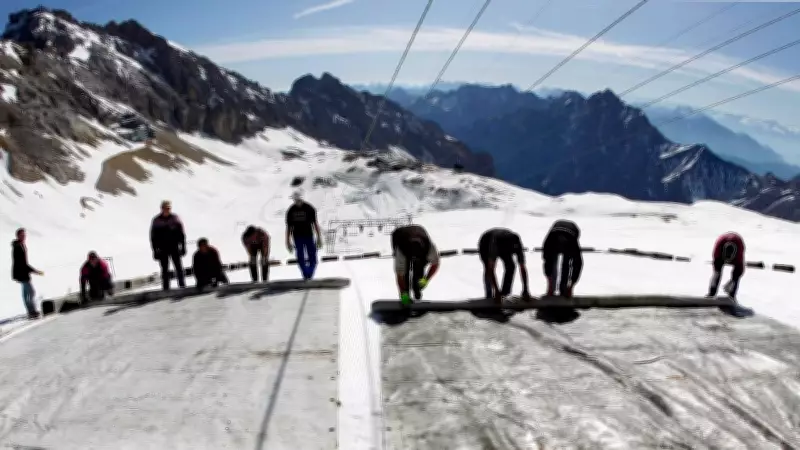
Vanishing Glacier on Germany's Zugspitze Triggers Ski Lift Demolition
The iconic glacier atop Germany's highest mountain, the Zugspitze, is rapidly disappearing due to climate change, forcing authorities to dismantle ski lifts and other winter sports infrastructure. This dramatic environmental shift underscores the profound impacts of global warming on Alpine regions and local economies dependent on tourism.
Accelerated Melting and Infrastructure Removal
Located near Garmisch-Partenkirchen in southern Germany, the Zugspitze glacier has experienced significant retreat in recent years. Historical efforts to preserve the ice, such as covering it with oversized plastic sheets in 2011, have proven insufficient against rising temperatures. The ongoing melt has now reached a critical point where ski lifts and supporting structures are no longer viable, leading to their planned demolition.
This development marks a stark milestone in the region's battle against climate change. The glacier's decline not only affects winter sports but also threatens water resources and local ecosystems that rely on the ice.

Broader Implications for Alpine Communities
The situation on the Zugspitze reflects a wider trend across the Alps, where glaciers are retreating at an alarming rate. Scientists warn that without substantial reductions in greenhouse gas emissions, many of these ice formations could vanish entirely within decades. For communities like Garmisch-Partenkirchen, which depend heavily on ski tourism, the economic consequences are severe.
- Loss of winter tourism revenue as ski seasons shorten and infrastructure becomes unusable.
- Increased costs for artificial snowmaking and other adaptation measures.
- Long-term impacts on biodiversity and water availability in downstream areas.
Local authorities are now faced with the challenge of transitioning to more sustainable tourism models, potentially focusing on summer activities or eco-tourism to offset losses from winter sports.
Climate Change and Future Projections
Research indicates that the Zugspitze glacier's retreat is directly linked to global temperature increases. The Intergovernmental Panel on Climate Change (IPCC) has highlighted the vulnerability of mountain glaciers worldwide, with projections suggesting continued mass loss under current emission scenarios. In Germany, this has prompted calls for stronger environmental policies and investment in renewable energy to mitigate further damage.
The demolition of ski lifts on the Zugspitze serves as a visible reminder of the urgent need for climate action. As one of Germany's most famous natural landmarks, its changing landscape may influence public perception and policy decisions regarding environmental protection.