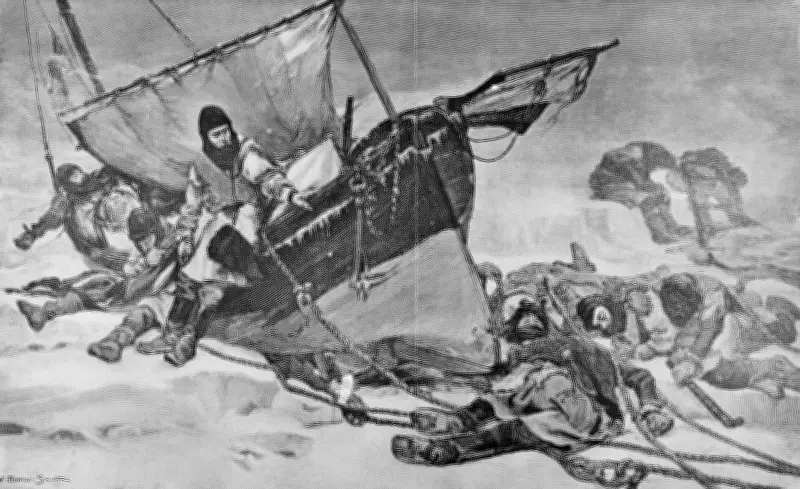
Researchers have identified the remains of four members of the ill-fated 1845 Franklin expedition using advanced DNA analysis. The discovery sheds new light on one of the Arctic's most enduring mysteries, where 129 crew members perished after their ships became trapped in ice.
Breakthrough in Arctic History
The study, published in a leading scientific journal, successfully extracted DNA from skeletal remains recovered from King William Island in Nunavut. The four individuals were identified as crew members of HMS Erebus and HMS Terror, the two ships commanded by Sir John Franklin.
This marks the first time that multiple members of the expedition have been identified through genetic testing. Previous efforts had only identified one sailor, Warrant Officer John Gregory, in 2021.

Details of the Identification
The research team compared DNA samples from the remains with living descendants of the crew members. The four identified sailors include:
- James Reid, a Royal Marine from Scotland
- John Hartnell, an able seaman from England
- Thomas Armitage, a gunner from Ireland
- William Braine, a Royal Marine from England
Their remains showed signs of malnutrition, lead poisoning, and tuberculosis, consistent with historical accounts of the expedition's final days.
Historical Context
The Franklin expedition departed from England in 1845 with the goal of charting the Northwest Passage. Both ships became trapped in ice near King William Island in 1846. The entire crew perished, with the last survivors reportedly resorting to cannibalism before succumbing to the harsh conditions.
Over the years, numerous search expeditions recovered artifacts and remains, but few could be identified. The recent DNA breakthroughs have been made possible by advances in genetic sequencing technology.
Scientific Significance
Dr. Douglas Stenton, a lead researcher on the project, stated, "This work not only honors the memory of these men but also provides crucial insights into the health and experiences of the crew." The team hopes to continue identifying more remains in the future.
The findings have been welcomed by descendants of the expedition members and historians alike, offering closure after nearly two centuries.