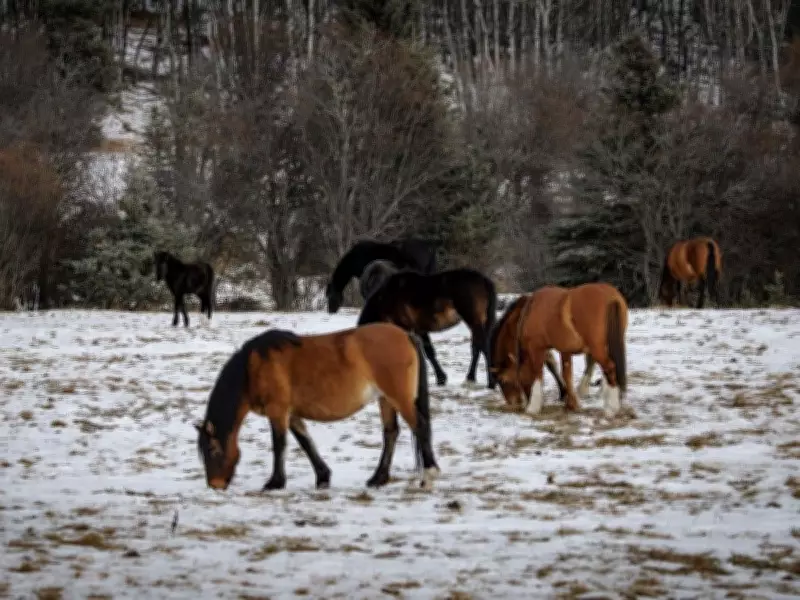
Coal Mining Expansion Threatens Wild Horse Habitat in Clearwater County
Recent reports have revealed a concerning development in Alberta's Clearwater County, where coal mining leases now cover nearly 10 percent of the region. This industrial expansion directly overlaps with the Clearwater Equine Management Zone, an area where wild horse bands have roamed freely for generations. The consequences of this development extend far beyond the mining sites themselves, creating a ripple effect that impacts wildlife, private landowners, and rescue organizations.
The Displacement Dilemma: When Wild Horses Lose Their Range
When industrial activities like coal mining fragment or degrade wild horse habitat, these animals don't simply disappear from the landscape. Instead, they are forced to move, often migrating onto private agricultural lands where they compete with livestock for resources. This displacement creates significant conflicts with landowners, as the horses damage fencing, consume crops, and disrupt farming operations. The situation represents a classic case of environmental displacement with real-world consequences for both wildlife and human communities.
The Rescue Reality: Mounting Costs and Strained Resources
For organizations like the Wild Horses of Alberta Society, the impact of coal mining development is felt directly at their rescue facilities. As displaced horses arrive in increasing numbers, rescue teams face stressed animals, sudden intake surges, and mounting operational costs. Each horse requires approximately $20 per day for basic care alone, not including essential veterinary work, farrier visits, and the months of training necessary to prepare them for adoption. These expenses fall squarely on non-profit organizations operating with limited budgets, volunteer labor, and donation-dependent funding.

"Our small team and tight budget absorb the downstream effects of decisions made far from the rescue barn," explains Kristen Lawson, board secretary of the Wild Horses of Alberta Society. "We see the direct result of habitat fragmentation every day in our facilities."
The Policy Gap: Who Bears the Burden of Displacement?
This situation highlights a significant gap in current land-use policy. The costs associated with wildlife displacement are effectively externalized onto private landowners who didn't create the problem and non-profit organizations operating on shoestring budgets. Meanwhile, the mining companies and government agencies approving these developments don't bear the direct financial burden of managing displaced wildlife. This creates an uneven distribution of responsibility that fails to account for the full environmental and social costs of industrial expansion.
Toward Sustainable Solutions: Proactive Protection vs. Reactive Rescue
Sustainable land-use planning must account for cumulative effects on wildlife habitats. Each industrial activity that fragments habitat increases pressure on an already multi-use landscape and on the rescue infrastructure that quietly works to manage the consequences. Proactive habitat protection represents both a more humane approach to wildlife management and a more cost-effective strategy than reactive rescue operations.
If coal mining proceeds in Clearwater County, stakeholders need to engage in an honest conversation about responsibility and accountability. Key questions that must be addressed include:
- Who manages the consequences of wildlife displacement?
- Who pays for the care and rehabilitation of affected animals?
- How can industrial development be balanced with wildlife conservation?
- What mechanisms exist to ensure mining companies contribute to mitigation efforts?
The wild horses themselves will ultimately reveal the answers through their behavior and survival patterns. As Lawson notes, "The wild horses will tell us the answer soon enough. They always do." The question remains whether policymakers and industry leaders will listen before irreversible damage occurs to both the landscape and its inhabitants.