Mike Drew's Chinook Quest: A Windy Search for Snowmelt in Alberta Plains
On a blustery Tuesday morning, March 17, 2026, journalist Mike Drew set out from Calgary, defying a yellow wind warning in pursuit of melting snow and cascading runoff across the southern Alberta plains. With recent heavy snowfalls fresh in mind, he envisioned fields still partially blanketed in white, fed by the warm chinook winds. However, as he quickly discovered, nature had other plans, leading to a day of surprising observations and resilient wildlife encounters.
A Journey into the Howling Wind
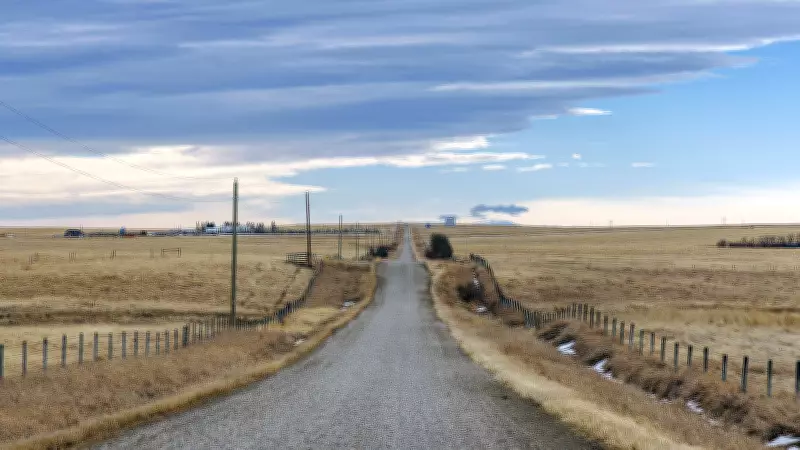
Departing under skies churned by chinook clouds, Drew first stopped along the Bow River near Policeman's Flats. He checked the blue heron rookery, finding no birds yet, but noted puffed aspen catkins, cousins to willows, adding a touch of early spring. From there, he headed east, hoping to witness flowing slopes along Gladys Ridge and waterways like the Little Bow River and Mosquito Creek. To his dismay, snow patches were scarce, vanishing entirely within an hour of travel southward.
"I should have known," Drew reflected, acknowledging that foothill snow doesn't guarantee plains coverage. Earlier winter snow had already melted, leaving ditches dry and fields bare. Despite the disappointment, he pressed on, driven by curiosity and the sheer force of the wind, which howled loudly enough to hear grit hitting his truck.

Wildlife and Wind-Swept Landscapes
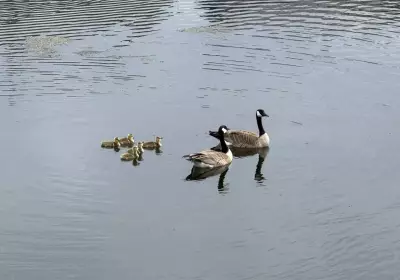
As he traversed the tawny fields, Drew observed minimal wildlife: horned larks pecked roadside before flying low, and partridge pairs scurried across roads, mostly staying grounded. Near Carmangay, he paused at aging farm buildings, noting a granary leaning northeast—a possible testament to decades of chinook winds pushing persistently. Further south, in a low field spot, he spotted Canada geese, ducks, and swans, later identified as tundra swans by their distinctive yellow eye markings at Keho Lake.
At Keho Lake, the wind intensified, with gusts nearing 100 km/h, making photography a challenge as it buffeted his lens. The lake presented a dramatic scene: churning waves with ice on the west end, while the midpoint remained partially frozen. Birds, including geese and swans, all faced into the wind, a clever adaptation for easy takeoff. Drew marveled at the ice flexing, possibly due to Bernoulli's principle or wave action, adding a scientific intrigue to the wild weather.
Unexpected Discoveries and Calm Moments
The wind didn't deter everyone—kitesurfers reveled in the gusts, soaring high above Keho Lake's waves. After circling the lake, Drew headed toward Clear Lake east of Stavely, where he found a battered Richardson's ground squirrel, its wounds hinting at a fierce territorial fight or narrow escape from a predator. As he drove on, the wind abruptly ceased near Mosquito Creek, revealing a serene landscape of brown hills and frozen ponds under pearly light.
In a twist of irony, Drew finally encountered what he'd sought all day: a ditch full of dark snowmelt runoff east of Parkland. It was a modest find, but a satisfying end to a journey filled with more subtle wonders than expected. From smart geese sheltering in a hay barn to the reflective waters of an irrigation pump, the day underscored the unpredictable beauty of Alberta's plains during chinook season.
Reflecting on the adventure, Drew mused, "Yeah, I always think I'm not going to get fooled again. And then I do." His quest, though not yielding the anticipated snowmelt, offered a rich tapestry of wildlife resilience and atmospheric drama, reminding us that sometimes, the journey itself holds the greatest rewards.