Nearly six years after the mission began, a group of University of Calgary students watched eagerly as their nano satellite was successfully launched into space on Sunday. The launch from Vandenberg Space Force Base in California marked the first time a student-led research team from Calgary designed and developed a satellite sent into Earth's low orbit.
Historic Achievement for Calgary
"Reality really set in for me that, wow, we actually built something that went into space," said Ebube Anachebe, a member of CalgaryToSpace, the team behind the satellite. "We've now got a satellite up in space, and we have our name up there. And now we as Calgarians have a direct connection to space."
The satellite, named FrontierSat, is about the size of a loaf of bread. CalgaryToSpace formed in the summer of 2020 to give U of C undergraduates hands-on experience in the aerospace sector. Students were involved in every step, from design and development to testing.

Student-Led Project
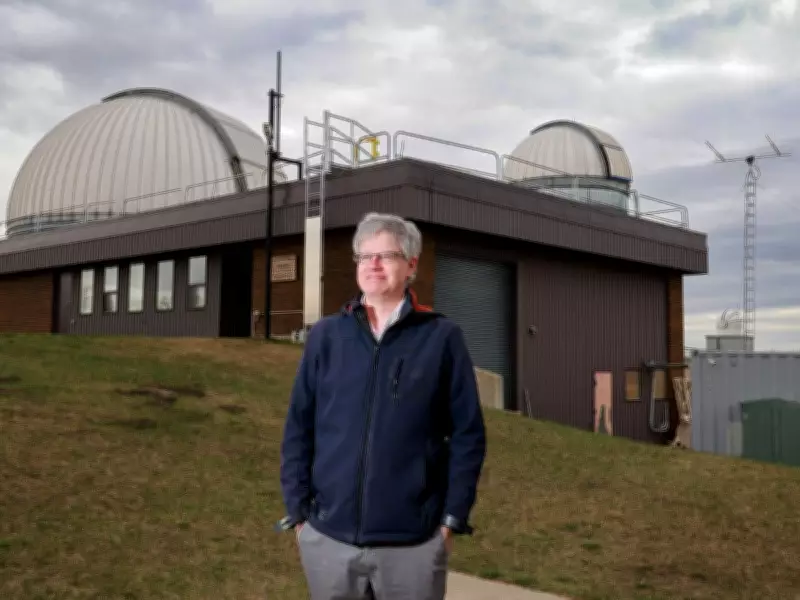
Dr. Johnathan Burchill, assistant professor of physics and astronomy at the U of C, advises the 100-member team. He noted that most participants study engineering, but other faculties are also represented. "It's a huge team, and they're very excited to be supporting a scientific endeavor," he said Monday from the Rothney Astronomical Observatory south of Calgary.
The launch at roughly 1 a.m. Calgary time on Sunday was "flawless," according to Burchill. Many team members watched the SpaceX broadcast live, with some traveling to California to see the rocket launch in person.
Deployment and Operations
After breaching Earth's atmosphere, the CubeSat was deployed from a pod on the SpaceX Falcon 9 rocket by the team's launch partner, Exolaunch, a German-based company specializing in space mission management. "It was exciting," Burchill said.
Despite the culmination of six years of hard work, the team had little time to rest. On Monday morning, researchers assembled at the Rothney Astronomical Observatory to establish contact with the satellite as it made its first pass over 500 kilometers above sea level. The observatory in Priddis will serve as mission control for ground-level operations over the next few years.