Canadian-Chilean Expedition Documents Accelerating Glacier Retreat in Antarctica
For over a decade, scientists have meticulously recorded the retreat of Antarctic sea ice, a direct consequence of human-induced climate change. Now, a groundbreaking 14-day expedition by Canadian and Chilean researchers aboard the icebreaker Almirante Viel has returned with vital data that will enhance our understanding of how the continent's ice, oceans, and ecosystems are transforming.
Expedition Details and Key Findings
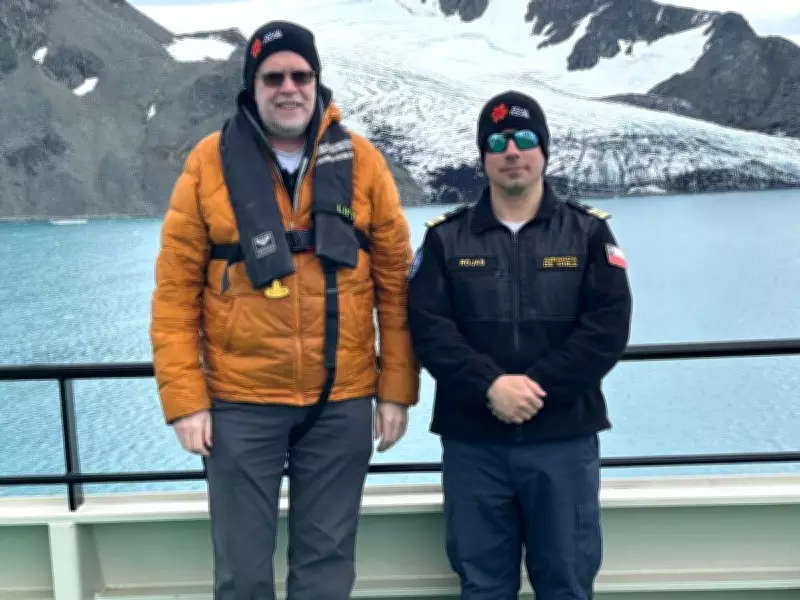
The team, led by chief scientist Thomas James from the Geological Survey of Canada, included ten Canadian scientists from Natural Resources Canada, the Fisheries Department, and four Canadian universities, alongside two Chilean researchers. They conducted their work in the South Shetland Islands and Bransfield Strait, areas critical for studying glacial dynamics.
James, a Victoria resident, emphasized the global significance of Antarctica, which holds approximately 90 percent of the planet's ice. "What happens here will have major effects on the rest of the world," he stated, underscoring the expedition's importance in predicting future climate impacts.

Advanced Technology and Research Methods
The expedition utilized the newly built Chilean icebreaker, equipped with advanced technology such as a multi-beam echo-sounder. This allowed the team to collect high-resolution data in previously unmapped regions, including fjord heads where glaciers are rapidly retreating. Key activities included:
- Obtaining sediment samples to analyze historical changes
- Updating regional seabed maps with precise measurements
- Using coring machines to extract two-meter deep samples from the sea floor
By examining sediment cores, researchers can detect variations that indicate increased iceberg calving and glacial melt, providing insights into the acceleration of these processes.
Observations of Ecosystem Changes
Despite challenging weather conditions with rain and wind, the collaboration between Canadian and Chilean scientists was highly successful. James described the Antarctic landscape as "stunning" but noted emerging changes, such as increased vegetation—a phenomenon scientists refer to as the "greening of Antarctica."
He explained, "We do start to see more species that we would have seen in more temperate regions, as opposed to polar regions. But by and large, it's a picture of rock, bare rock, with moss." The team also observed beaches with cobbles, penguins, and seals, highlighting the region's unique but shifting biodiversity.
Implications for Global Climate Science
This expedition builds on previous research, including studies on the so-called "Doomsday glacier" and predictions that half of Earth's glaciers could disappear this century. The data collected will contribute to:
- Better understanding of sea level rise projections
- Enhanced models of glacial retreat and ecosystem responses
- Informed policy decisions on climate mitigation and adaptation
As the team returns home, their findings underscore the urgent need for continued international cooperation in monitoring and addressing climate change impacts in polar regions.