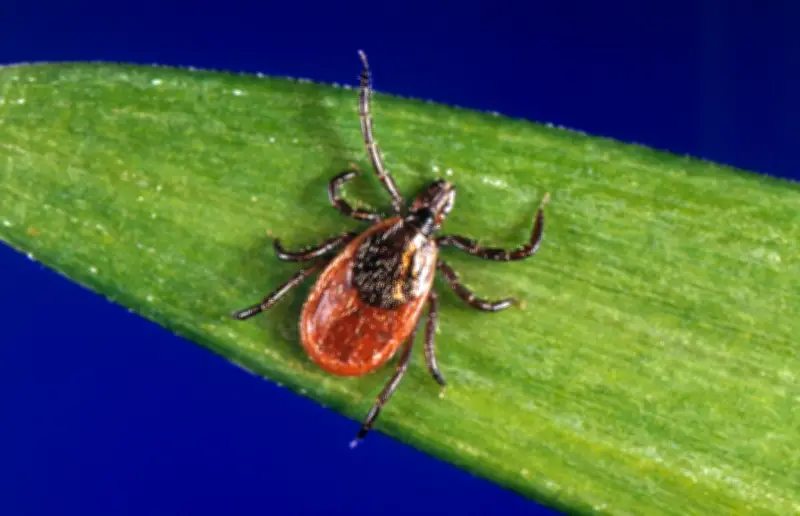
With warmer weather settling in across Manitoba, tick season has officially arrived in Winnipeg, prompting health officials and entomologists to urge residents to take precautions against tick bites and the diseases they carry, including Lyme disease.
Where Ticks Hide and How to Avoid Them
Ticks are commonly found in tall grass, wooded areas, and leaf litter, particularly along trails and at the edges of forests. Kateryn Rochon, a medical entomologist at the University of Manitoba, explains that ticks are most active when temperatures rise above 4°C. "They're waiting on vegetation for a host to pass by," she said. "Sticking to the centre of trails and wearing long pants tucked into socks can reduce your risk significantly."
Residents are advised to use insect repellents containing DEET or icaridin, and to perform full-body tick checks after spending time outdoors, especially on children and pets. Showering within two hours of coming indoors can help wash off unattached ticks.

Lyme Disease Risk in Manitoba
Blacklegged ticks, which can transmit Lyme disease, are established in parts of southern Manitoba, including the Winnipeg region. Early symptoms of Lyme disease include a bullseye rash, fever, headache, and fatigue. If left untreated, the infection can spread to joints, the heart, and the nervous system. According to the Manitoba government, there were 67 confirmed cases of Lyme disease in the province in 2024, a number that has been steadily rising over the past decade.
What to Do If You Find a Tick
If a tick is found attached, it should be removed promptly with fine-tipped tweezers, grasping the tick as close to the skin as possible and pulling straight out with steady pressure. The bite area should then be cleaned with soap and water. Rochon notes that the risk of Lyme disease transmission is low if the tick is removed within 24 to 36 hours. "But if you develop symptoms, see a doctor and mention the tick bite," she added.
Community Awareness Key
Public health campaigns are underway to educate Winnipeggers about tick habitats and prevention. The city is also monitoring tick populations through passive surveillance, where residents can submit ticks for identification and testing. "Awareness is the most powerful tool we have," said Rochon. "Knowing where ticks live and how to prevent bites can keep you safe while enjoying the outdoors."