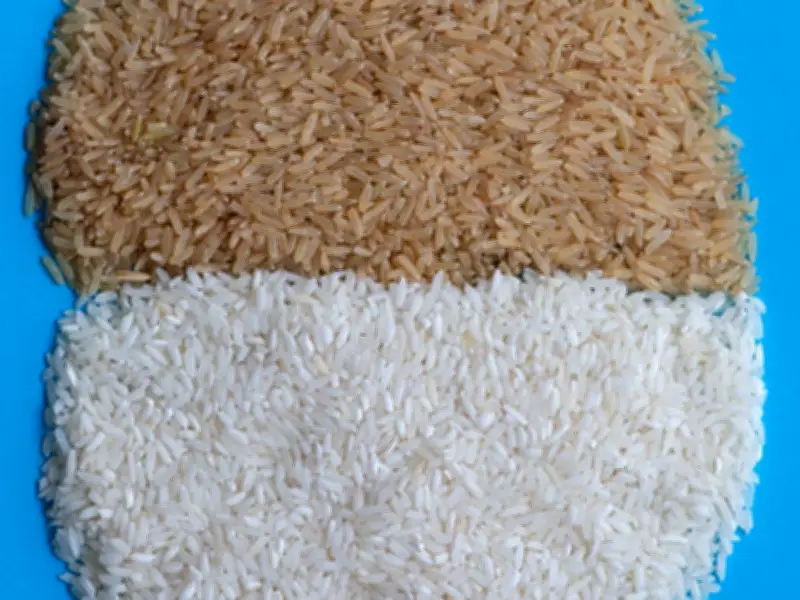
Consumer Reports has found measurable levels of inorganic arsenic in all 52 rice products it tested, with brown rice averaging higher concentrations than white rice. The report, published in July 2026, indicates that 42% of the products contained levels high enough that an adult eating a single serving daily over time would face a significantly increased risk of skin cancer, bladder cancer, and type 2 diabetes.
Brown Rice and Rice Type Differences
Brown rice consistently showed higher average inorganic arsenic levels compared to white rice. Among the varieties tested, basmati and sushi rice had lower average levels of inorganic arsenic—the more toxic form of the metal—than other rice types. The findings come from testing conducted on 52 rice products, with samples analyzed for both organic and inorganic arsenic.
Arsenic exists in two forms: organic and inorganic. Inorganic arsenic is more toxic and commonly found as a contaminant in water and soil. According to some estimates, rice absorbs up to 10 times more arsenic than other crops grown in similar soil because it is typically cultivated in flooded fields, where the element is more readily taken up from soil and water.

Consumer Reports Findings and Health Risks
James E. Rogers, PhD, director of food safety at Consumer Reports, stated: “As we did more than a decade ago, we found measurable levels of inorganic arsenic in all of the samples of the products.” He added that in 42% of the products, the average inorganic arsenic levels were high enough that an adult eating just one serving a day over time would have a significantly increased risk for skin cancer, bladder cancer, and type 2 diabetes.
Consumer Reports also tested for cadmium, lead, and mercury. Detectable levels of arsenic, cadmium, and mercury were found in all 142 samples, while lead was detected in 66 of them. The organization emphasized that there is no safe level of inorganic arsenic.
FDA Limits and Calls for Regulation
Currently, the U.S. Food and Drug Administration (FDA) has set a limit of 100 parts per billion (ppb) for inorganic arsenic in infant rice cereals. When these cereals exceed that level, the FDA may take enforcement actions, including working with companies to recall products deemed unsafe. Seventeen of the products tested by Consumer Reports averaged 100 ppb or more. Given the absence of federal arsenic limits for other rice products, Consumer Reports editors believe the FDA should set limits for all rice products.
The report noted that its findings were a spot check of the market and should not be used to draw definitive conclusions about specific brands. However, the organization offered recommendations to reduce exposure: choosing lower-arsenic rice varieties such as basmati or sushi rice, rotating in other grains like quinoa, barley, farro, oats, and sorghum, cooking rice in excess water and draining it afterward, and limiting rice intake to a few servings per week.
The article was authored by Jane Stevenson and published in the Toronto Sun.