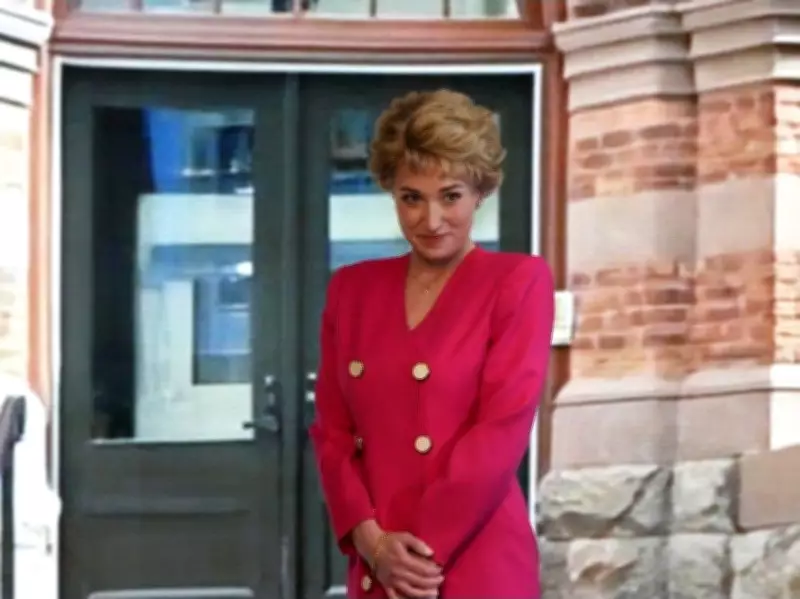
Casey and Diana Play Chronicles Princess Diana's Compassionate AIDS Hospice Visit
In a powerful theatrical production, the historic 1991 visit of Princess Diana to Toronto's Casey House AIDS hospice is being brought to life. Alberta Theatre Projects is staging Nick Green's acclaimed play Casey and Diana from February 24 through March 15, capturing a moment that transformed public perception of AIDS patients worldwide.
A Defining Moment in AIDS Activism
On October 25, 1991, Princess Diana made an unprecedented visit to Casey House, Toronto's specialized hospice for AIDS patients. In what became an iconic gesture of compassion, she deliberately chose not to wear protective medical gear—no gown, mask, or gloves—as she sat on patients' beds and shook hands with the men residing there. This simple act challenged widespread misconceptions about HIV transmission and became a landmark moment in global AIDS activism.
"Diana wanted to show the world there were misconceptions about the virus that caused AIDS," explains Calgary actor Emily Howard, who portrays the princess in the production. "People had believed it could be transmitted by mere contact. She showed this was not true. It was 1991, and people needed to know."

Bringing Diana to Life on Stage
Emily Howard has immersed herself in extensive research to authentically portray both the public and private aspects of Princess Diana. She has studied interviews with the late princess and examined performances from Netflix's The Crown to understand Diana's mannerisms and speech patterns.
"I have also watched the Netflix series The Crown to see how Emma Corrin and Elizabeth Debicki played Diana, especially when there were no cameras around," Howard reveals. "She was very different, as we all would be. I would like to play the real person, as well as the public person we all know."
The production team is meticulously recreating Diana's appearance, including the distinctive pink suit she wore during the visit and a carefully crafted wig. "They are recreating that special pink suit she wore, and the wig is definitely her," Howard notes. "It will definitely help me feel like her."
Context of the AIDS Crisis
Nathan Cuckow, who portrays a Casey House patient in the production, provides historical context about the AIDS crisis during that era. "In the early '80s, in particular, even the doctors, nurses and hospital staff members knew very little about AIDS, and were afraid of it," Cuckow explains. "They would leave the patients' meals outside their rooms, so they would have to get up to get them. People were shunned by their families."
Cuckow emphasizes that Diana's visit represented a crucial turning point. "What Diana did was to show the compassion people wanted. What she did by her visit to Casey House was to show how misplaced fears were." He notes that while significant progress has been made in understanding and treating AIDS since 1991, the play reminds audiences of the stigma that once surrounded the disease.
A Play About Hope and Compassion
Despite the serious subject matter, Cuckow insists that Casey and Diana offers an uplifting theatrical experience. "Casey and Diana is not a maudlin experience. It is a play about compassion. It is a great deal funnier than what people are going to be expecting. It is also a very hopeful play. It's uplifting. It's entertaining."
The play has already proven popular with audiences. Since its premiere at Stratford in 2023, it has become one of the most produced new plays in Canada. For the Alberta Theatre Projects production, main floor seating is nearly 90 percent sold out for the first two weeks of the Calgary run.
Continuing the Journey
Following its Calgary engagement, Casey and Diana will transfer to Edmonton's Citadel Theatre, where it will run from April 4 through April 26. The production continues to resonate with audiences, serving as both a historical document and a testament to the power of compassionate action in the face of fear and misunderstanding.

Through this theatrical exploration, audiences are invited to witness a pivotal moment when a royal figure used her platform to challenge stigma and demonstrate that human connection transcends fear—a message that remains profoundly relevant today.