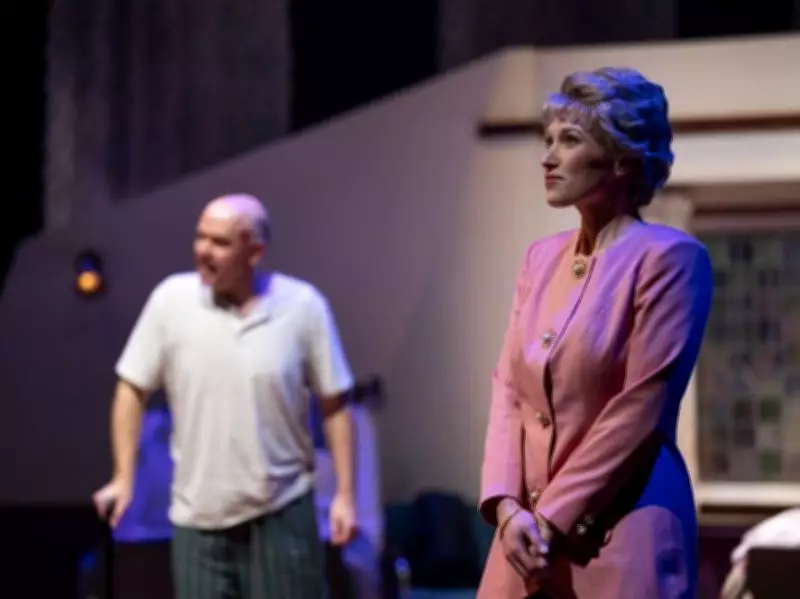
Casey and Diana Transforms AIDS Narrative into Intimate Human Drama
Nick Green's powerful play Casey and Diana achieves something remarkable: it transforms the historical tragedy of the AIDS epidemic into a deeply personal, human story that resonates with emotional truth. Currently in production by Alberta Theatre Projects, this comic-drama uses Princess Diana's historic 1991 visit to Toronto's Casey House—the city's first AIDS hospice—as its central catalyst, exploring themes of life, death, and human connection.
Princess Diana as Ethereal Presence
Emily Howard's portrayal of Princess Diana is nothing short of mesmerizing. She embodies the royal figure as an almost ghostly presence, gliding through the non-linear narrative while maintaining the regal public persona for which Diana was known. Yet Howard masterfully reveals the humanity beneath the royal exterior, particularly in a magical moment when Diana learns of an ice-breaker the men have planned to ease the solemnity of her visit.
The actress takes a brief pause to digest this information, then laughs—not with polite royal decorum, but with genuine, womanly amusement. This subtle yet powerful moment exemplifies how the production balances historical reverence with intimate characterization.

Thomas: The Heart of the Play
At the emotional center of Green's work is Thomas, Casey House's longest resident, portrayed with remarkable depth by Nathan Cuckow. Having lost four roommates to the virus, Thomas has endured immense suffering yet retains his acerbic wit and cultural knowledge. He represents the aging homosexual archetype familiar from theater and film, but Cuckow's performance makes him feel freshly human and humane.
When news arrives that Princess Diana will visit in a week, Thomas casually remarks he hadn't planned to be around that much longer. This moment creates the play's central tension—audiences immediately invest in his survival, forgetting momentarily that he faces death daily. Cuckow's ability to balance humor with mortality makes Thomas both relatable and profoundly moving.
Supporting Characters Add Depth and Contrast
Norma Lewis delivers a powerful performance as Vera, the head nurse who represents the medical establishment's approach to the virus. Initially appearing detached, Vera reveals her humanity in a second-act speech where she recalls what happens when professionals let down their guard and treat patients with more than clinical care. Lewis's delivery transforms this revelation into both warning and memory, adding crucial perspective to the narrative.
Josh Travnik portrays Andre, Thomas's newest roommate—a young man as angry as he is terrified. His transfer from hospital to hospice feels like a death sentence, compounded by parental abandonment due to his homosexuality. Travnik relates Andre's devastating memory of living in his parents' basement with matter-of-fact sincerity that makes the character's pain palpable and condemns parental rejection of LGBTQ children.
April Banigan's Marjorie represents the audience's perspective as a volunteer who sees patients as special people after losing her best friend to AIDS. Ironically, her volunteering serves her own needs as much as the patients', creating an interesting contrast with Vera's professional detachment. Helen Knight completes the ensemble as Pauline, Thomas's sister, who initially appears hateful through Thomas's eyes after rejecting him upon learning his diagnosis. Knight's powerful speech about wearing out her funeral dress attending friends' funerals reveals her fear of death rather than the virus itself.
A Production That Honors History While Creating Art
Casey and Diana succeeds precisely because it focuses on characters rather than just historical events. Green's writing, combined with Alberta Theatre Projects' sensitive production, transforms what could have been a distant tragedy into an immediate, heartfelt human story. The play reminds audiences that behind historical moments like Princess Diana's hospice visit are real people with complex emotions, relationships, and struggles.

Through its balanced ensemble, the production explores multiple perspectives on the AIDS crisis—from medical professionals to patients, volunteers to family members. Each character adds another layer to understanding how individuals navigated this devastating period in history. The result is theater that educates while it entertains, that honors history while creating meaningful art, and that ultimately transforms statistics and headlines into stories that touch the human heart.