Woodstock Legend 'Country' Joe McDonald Dies at 84, Leaves Legacy of Counterculture Music
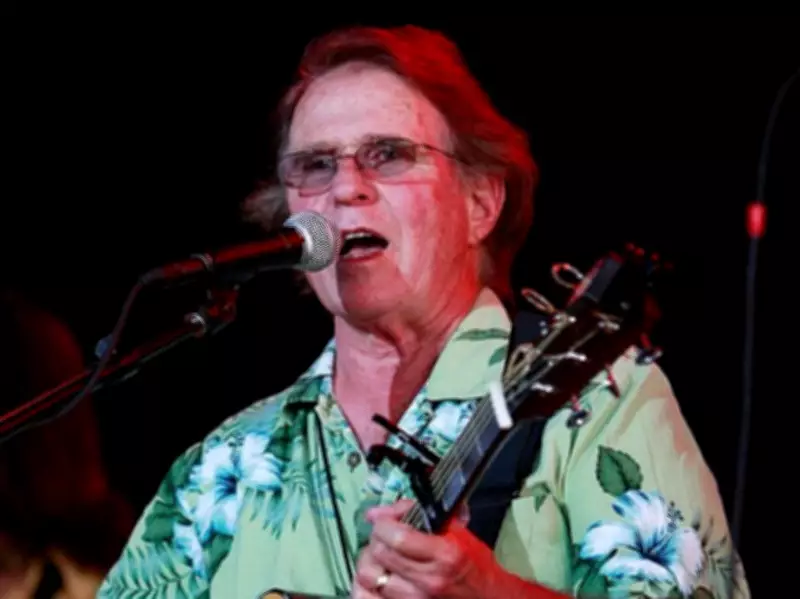
'Country' Joe McDonald, the iconic frontman of the psychedelic folk band Country Joe and the Fish who famously performed at the 1969 Woodstock festival, has died at age 84. The musician passed away on Saturday in Berkeley, California, surrounded by his family, due to complications from Parkinson's disease.
A Defining Voice of the 1960s Counterculture Movement
McDonald was widely recognized as one of the defining voices of the 1960s counterculture movement. His music masterfully blended folk, rock, and political commentary, capturing the spirit of a generation deeply affected by social upheaval, civil rights struggles, and the Vietnam War.
"At this time, the McDonald family requests privacy during this very difficult period," his publicist said in a statement. The musician's prolific career spanned more than 30 albums from the early 1960s to the mid-2010s, leaving an indelible mark on American music history.

From Protest Songs to Woodstock Fame
Born in Washington, D.C., in 1942 and raised in California, McDonald formed Country Joe and the Fish alongside Barry "The Fish" Melton. The duo played their darkly humorous songs about political and social issues throughout the Bay Area, inspired by Woody Guthrie and the protest music of the era.
McDonald penned the anti-Vietnam War anthem "I-Feel-Like-I'm-Fixin'-to-Die Rag," which became one of his most famous works. The song's lyrics, including the memorable lines "And it's one, two, three, what are we fighting for?/Don't ask me I don't give a damn/Next stop is Vietnam," captured the frustration and disillusionment of the era.
He told the New York Times in 2017 that he was inspired to "write a song about how soldiers have no choice in the matter, but to follow orders, but with the irreverence of rock and roll. It was essentially punk rock before punk existed."
The Woodstock Performance That Made History
Country Joe and the Fish performed both "The 'Fish' Cheer" and "I-Feel-Like-I'm-Fixin'-to-Die Rag" at Woodstock in 1969. During their set, McDonald famously led the crowd in a spell-chant of the word "f***" - a moment that was featured in the documentary about the festival and became legendary in music history.
"It was just unbelievable that they allowed it to go in the movie in 1969," McDonald told Rolling Stone in 2019, for the 50th anniversary of his performance at the festival. "I always say that Woodstock was like a family picnic; it was fun. You shouldn't underestimate that you were having fun."
Reflecting on his controversial anthem, he noted: "So my most famous song couldn't be played on the radio. Some people lost their jobs for playing it on the radio, but it's great. It's a great moment. I'm happy and proud that I could represent the Vietnam War and Vietnam veterans in that moment. It was very powerful."
Life After Woodstock and Political Activism
Following the festival, Country Joe and the Fish split, and McDonald embarked on a solo career beginning with 1969's Thinking of Woody Guthrie, a collection of songs by the folk legend who inspired him. He remained politically active throughout his life, advocating on behalf of saving whales and helping Vietnam War veterans.
In his 2019 interview with Rolling Stone, McDonald revealed that he had officially retired from performing. "I did a series of performances (recently), and now I'm done. I'm finished. I'm completely retired," he detailed. "I've been dabbling with being retired for a couple years, and now I'm just watching the grandkids, staying home and getting to know my neighbours."
A Lasting Legacy
McDonald is survived by his wife of 43 years, Kathy, five children, and four grandchildren. His music continues to resonate with generations of listeners who appreciate his unique blend of musical artistry and political consciousness.

From his early days in the Bay Area music scene to his historic Woodstock performance and decades of solo work, 'Country' Joe McDonald leaves behind a legacy that defined an era of American cultural and political transformation. His songs captured the spirit of protest and hope that characterized the 1960s, ensuring his place in the annals of music history as a true icon of counterculture expression.