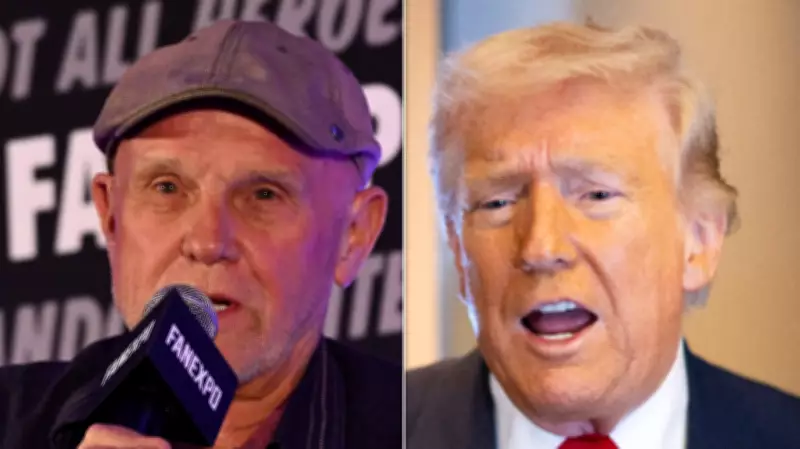
In a striking confrontation between pop culture and politics, a renowned video game voice actor has publicly denounced the Trump administration for appropriating his iconic character's voice in a controversial propaganda video. Steve Downes, the legendary voice behind Master Chief from the massively popular Halo franchise, took to social media on Sunday to express his outrage after the White House posted a video featuring his character declaring, "I'm finishing this fight," alongside footage of military strikes and explosions.
A Clear and Forceful Denunciation
Downes left no room for ambiguity in his response. "Let me make this crystal clear: I did not participate in nor was I consulted, nor do I endorse the use of my voice in this video, or the message it conveys," he wrote emphatically. He went further, demanding the immediate removal of his voice from what he described as "disgusting and juvenile war porn." The White House shared the video on Thursday, which coincided with the ongoing U.S.-Israeli military offensive against Iran that began nearly two weeks prior.
Pop Culture Clips in Political Messaging
The video in question is a montage that intercuts various explosions and military strikes with clips from well-known entertainment franchises. In addition to Halo, the compilation includes scenes from "Transformers," "Star Wars," "Breaking Bad," and "Yu-Gi-Oh!" This approach has sparked significant criticism for blending fictional entertainment with real-world conflict, a tactic that many argue trivializes the seriousness of war. HuffPost has reached out to the White House for comment on the matter, but no response has been provided at this time.

A Pattern of Unauthorized Use
This incident is not an isolated one for the Trump administration. Downes joins a growing list of celebrities and creators who have slammed the White House for using their work without permission to advance political agendas. Notably, comedian and actor Ben Stiller also took to social media on Friday to condemn the administration for using a clip from his movie "Tropic Thunder" in the same video. "[We] have no interest in being a part of your propaganda machine. War is not a movie," Stiller wrote, echoing Downes' sentiments.
Escalating Tensions and Broader Criticisms
The controversy arrives months after the White House shared an AI-generated image depicting President Trump as Master Chief saluting a giant American flag, further blurring the lines between gaming iconography and political propaganda. Over the past year, the Trump administration has faced mounting criticism for its provocative social media tactics, which several musical acts, entertainers, and even a children's book franchise have condemned for appropriating their creative works without consent.
In recent weeks, the White House has increasingly turned to footage from video games like Grand Theft Auto and Call of Duty to produce wartime hype videos, a strategy that has drawn ire for its sensationalist approach. This pattern highlights a broader trend of using entertainment media to frame military actions, raising ethical questions about the intersection of pop culture and government messaging. The ongoing backlash underscores the tension between artistic expression and political exploitation in the digital age.