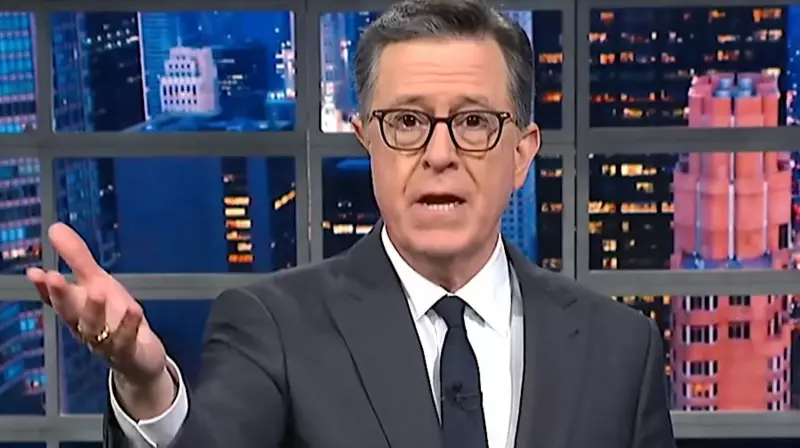
In a powerful and politically charged opening to his Monday night broadcast, Late Show host Stephen Colbert expressed gratitude to his live audience for braving a severe winter storm that blanketed New York and much of the United States with snow, ice, and frigid temperatures. However, the comedian quickly pivoted from the weather to deliver a scathing commentary on a far more chilling event.
Colbert's Blunt Critique of Federal Immigration Enforcement
After acknowledging the dedication of his viewers, Colbert stated, "I think we can all agree," before uttering two expletive-laden words that resonated deeply with the studio audience: "F*** ICE." The remark, met with immediate and thunderous applause and cheers, served as a direct condemnation of U.S. Immigration and Customs Enforcement (ICE). This set the tone for a monologue focused on a recent tragedy that has ignited national outrage and debate.
The Case of Alex Pretti: Nurse Killed in Minneapolis
Colbert dedicated the core of his segment to the story of 37-year-old Alex Pretti, an intensive care unit (ICU) nurse from Minneapolis. Pretti was shot and killed by federal agents this past Saturday during ongoing street protests in the city. According to reports, Pretti was attempting to film the agents' activities when the fatal confrontation occurred.

The incident has become a flashpoint, with Trump administration officials, including Homeland Security Secretary Kristi Noem and White House deputy chief of staff Stephen Miller, publicly labeling Pretti a "domestic terrorist" without presenting any substantiating evidence. This characterization stands in stark contrast to emerging video footage from the scene, which appears to contradict the official narrative.
Colbert's Summary of the Event
Summarizing the disturbing visuals and accounts, Colbert offered a blunt assessment to his nationwide audience: "Masked government agents disarmed an American citizen and then executed him in the streets. That's what it looks like." His monologue framed the shooting not as an isolated law enforcement action but as a symbol of broader concerns about government overreach and accountability.
By connecting the winter storm's physical cold to the political climate, Colbert used his platform to amplify a story that touches on critical issues of civil liberties, the use of force by federal officers, and the power of video evidence in the modern era. The segment underscores how late-night comedy shows in Canada and beyond are increasingly serving as venues for pointed political discourse and social commentary.