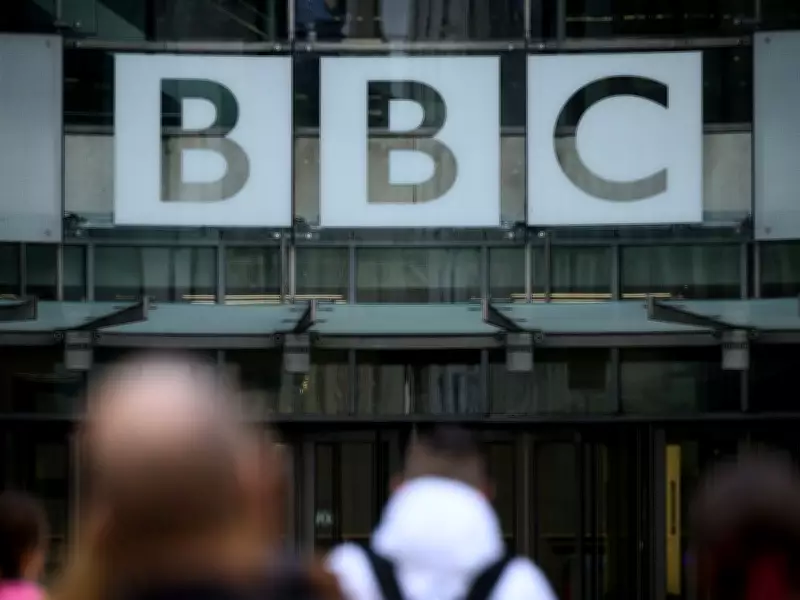
BBC Issues Formal Apology for Omitting Jewish Identity of Holocaust Victims in Coverage
The British Broadcasting Corporation (BBC) issued a formal apology on Wednesday after facing significant criticism for its coverage of International Holocaust Remembrance Day, which took place on January 27. The controversy centered on the broadcaster's repeated failure to specifically identify the six million victims of the Holocaust as Jewish in several reports.
Specific Language Errors Prompt Widespread Criticism
In its coverage of the solemn memorial day, the BBC on multiple occasions referred to the Nazis' six million Jewish victims using the generic term "people" or the phrase "six million mostly Jewish people." This wording drew immediate condemnation from Jewish organizations and media watchdogs who argued it minimized the specifically antisemitic nature of the Holocaust.
A BBC spokesperson acknowledged the errors in a formal statement, writing: "Some instances where we said 'six million people' or 'six million mostly Jewish people' had been murdered by the Nazi regime. These were incorrectly worded for which we apologize. They should have referred to 'six million Jewish people.'"

Watchdog Groups Characterize Omission as Symptomatic of Broader Issues
The Campaign Against Antisemitism (CAS), a prominent British watchdog organization, characterized the BBC's language choices as indicative of deeper problems in how the broadcaster covers Jewish-related affairs. A CAS spokesperson wrote on social media platform X: "Even on Holocaust Memorial Day, the BBC cannot bring itself to properly address antisemitism."
The statement continued with a pointed criticism: "It is no wonder that an overwhelming majority of British Jews distrust the BBC. This is absolutely disgraceful broadcasting." The organization suggested this incident reflects what they perceive as the BBC's broader pattern of hostility toward Israel and, at times, toward Jewish people generally.
Parallel Incident in Birmingham Municipal Government
Separately but relatedly, municipal officials in Birmingham, located in the northern United Kingdom, also issued an apology for a similar omission. The city government had advertised a Holocaust memorial ceremony led by Mayor Zafar Iqbal that initially failed to mention Jewish victims specifically, instead referring broadly to "victims and survivors of the Holocaust and Nazi persecutions, as well as other genocides around the world."
After the Jewish Telegraph, a local newspaper, drew attention to the omission, the online statement was amended to include explicit reference to Jewish victims. Jamie Tennant, Birmingham's alderman for social justice, community safety and equality, told the Jewish Telegraph: "We acknowledge concerns that our recent communications did not explicitly reference Jews, who were the primary victims of the Holocaust, and apologise for any offence this may have caused."
Historical Context and Contemporary Challenges
The controversy occurs against a backdrop of historical attempts to disconnect Judaism from the Holocaust, documented even before the genocide concluded. During World War II, Soviet media outlets attempted to universalize Nazi atrocities to deny arguments supporting Zionism and avoid acknowledging ethnic diversity within the Soviet population.
In recent years, educators and Holocaust survivors across Western Europe have reported increasing difficulties teaching about the Holocaust in schools with significant Muslim student populations. Many of these students, according to reports, espouse worldviews that include higher levels of antisemitism than those reflected in polling among native European populations.
The BBC's apology represents a significant moment in ongoing discussions about media responsibility, historical accuracy, and the importance of precise language when documenting atrocities with specific ethnic and religious dimensions.