Finding Myself in the Red-Haired Misfit of 'Pretty in Pink'
At nine years old, I would often fashion my mother's polka-dotted turtleneck sweater into a makeshift skirt, tying the sleeves tightly around my waist. Growing up as a natural redhead, I was frequently the only ginger in my class, with few role models who shared my hair color. The characters I did admire, like Pippi Longstocking and Anne of Green Gables, were defined by their eccentricity—they owned their individuality with agency. Yet, I struggled to see my own differences as strengths rather than shortcomings. I begged my mother to let me dye my hair blonde, to which she would retort, "Don't you know women pay to get your hair color?" All I wanted was to blend in, until I discovered "Pretty in Pink" and began to understand the latent power in what made me distinct.
Andy Walsh: A Relatable Protagonist for the Outsider
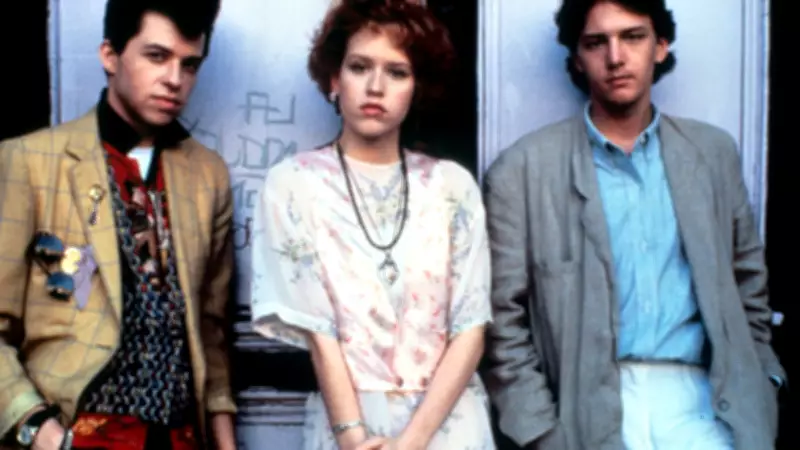
As Andy Walsh, Molly Ringwald embodied a character I instantly recognized. Though I was several years younger, I identified deeply with this wavy-haired, freckled misfit who sported an unapologetically unique style. Long before Cher selected her outfits via computer in "Clueless," Andy practiced a more relatable, hands-on approach to fashion. In one memorable scene, she appears wearing a dark vest over a white lace blouse, a belted pencil skirt, a cameo necklace, and socks layered over tights. When her father marvels at her "latest creation" and inquires about the cost, she proudly declares, "$15 for the shoes, secondhand, I made the rest."
At school, her best friend Duckie—himself a style icon with a bolero tie and blazer—affectionately dubs her outfit a "volcanic ensemble." However, the same wardrobe is later mocked by the wealthy, blonde popular girl, highlighting the social divides Andy navigates. Andy captivated me; she was cool, nonconformist, and friends with Ilona, her eccentric boss at Trax Record Store, who boasted her own funky, ever-evolving look. Yet, Andy also grappled with fitting in among her wealthier classmates, a universal struggle for belonging that resonates through John Hughes' films like "The Breakfast Club" and "Sixteen Candles."

The Journey to Self-Worth and Acceptance
Growing up, my single mother worked overtime to send me to private school, a privilege I cherished. Still, I found myself comparing my life to those of friends with more affluent lifestyles. When Andy falls for Blane, portrayed by Andrew McCarthy in his prime—a rich, preppy, and handsome student—it sparks both butterflies and self-shame. On their first date, an argument erupts when she admits she doesn't want him to see her home. Unlike Andy, I wasn't ashamed of where I lived; New York City's East Village was hardly the "wrong side of the tracks." But I recognized her instinct to magnify her differences as a barrier.
Years later, as a single adult, I drew similar parallels in dating. I preemptively deemed myself too eccentric for Blane-type men—a Jewish redhead who paired tutus with t-shirts and sneakers. I questioned what such a man would want with me, undermining my self-worth instead of leading with confidence. Andy and Blane's relationship underscores how social constructs, class, and culture can create divides, but their connection challenges these barriers, requiring courage and love to break free from fixed labels.
The Lasting Impact of a Cinematic Icon
Andy Walsh was the first character in which I saw my reflection. She provided validation that, as a tween, felt imperative. Here was a redhead who wasn't merely the spunky sidekick defined by feistiness alone; she was a layered protagonist—eccentric, yes, but also independent, yet craving affection and attention. From suitor Blane to her struggling alcoholic father and Duckie, whose unrequited love she both annoys and clings to, Andy's complexity was revelatory. I idolized her persona, inspired by her DIY fashion and the fearlessness with which she showcased it, even that controversial final prom dress.

As a teenager, I thrifted endlessly for costume jewelry, lace-up granny booties, and clothing to deconstruct. In my twenties, I would fall asleep to my "Pretty in Pink" DVD every weekend after long nights out, the flickering screen glow and iconic New Wave soundtrack serving as a comforting sound machine. Andy's refusal to cave to societal norms, especially in the face of the sleazy, wealthy Steff (played to perfection by a young James Spader), made her feel real and fearless. When Blane succumbs to peer pressure and backs out of taking her to the senior prom, she attends alone, ultimately reconnecting with him in a passionate kiss by the film's end.
A Timeless Message for New Generations
"Pretty in Pink" is more than a classic rom-com; it's a narrative about the bravery required to find love and validation within oneself. For me and countless others navigating their paths, Andy, Duckie, and Ilona served as templates for embracing eccentricities. Seeing them lean into their differences instilled in me the belief that I could do the same, setting me on a winding journey toward self-acceptance. Once, I believed fitting in was more beneficial than being original. Now, at 45 and a first-time mother, I understand that uniqueness should be highlighted, not hidden. I eventually found my own Prince Charming, someone whose predilections for the weird matched mine like a perfect puzzle piece.
For its 40th anniversary, "Pretty in Pink" returned to theaters for three days, delighting Gen Xers everywhere. The re-release includes a short documentary from director Howard Deutch, and the acclaimed soundtrack—featuring Orchestral Manoeuvres in the Dark's hit "If You Leave"—is being celebrated with a vinyl reissue. Forty years later, being weird has become more universal; people showcase their oddities daily, red hair is less unique, and women even pay for spray-on freckles. This serves as a poignant reminder that the film's core message—going against the grain is one of the bravest acts—remains more timely than ever. It's a lesson I hope to impart to my almost two-year-old daughter one day. If her favorite pastime of wearing my pink beret and oversized scarves and necklaces is any indication, she's already on the right track.