The Oscar-nominated film "Past Lives" has struck a profound chord with audiences, particularly those who have experienced the complex journey of immigration. The quiet, poignant story serves as a mirror for the millions who carry the ghost of a life that could have been.
The Universal Story of Nora and Hae Sung
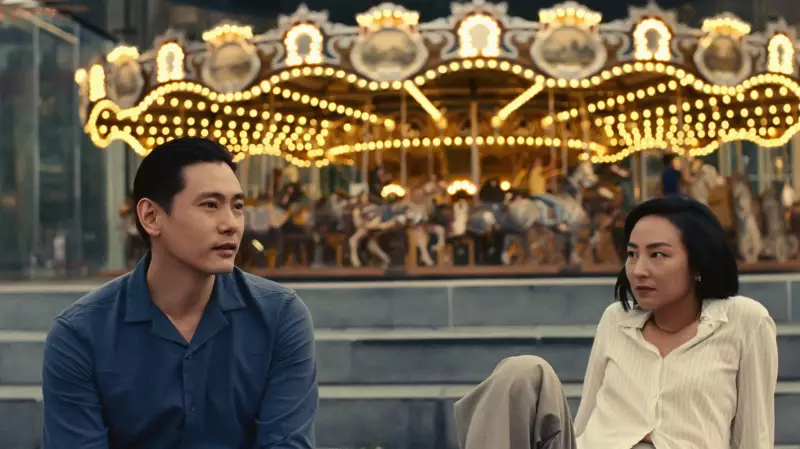
Nominated for Best Picture and Best Original Screenplay at the 2023 Academy Awards, "Past Lives" follows two childhood friends from South Korea, Nora (Greta Lee) and Hae Sung (Teo Yoo). Their deep connection is severed when Nora's family emigrates. Two decades later, their reunion in New York forces them to confront destiny, choice, and the enduring pull of a shared past.
This narrative is not unique to the characters on screen. For many immigrants, the film articulates a silent, persistent mourning. It gives voice to the constant wondering about the ghost life—the path not taken had they never left their homeland.

A Personal Reflection on Lost Connections
Like Nora, the author of the original HuffPost essay shares a parallel history. Before her family fled Iran during the 1979 Revolution, she had a childhood companion—a gentle boy with sea-blue eyes, the son of her mother's close friend. He was her confidant, a playmate in a room filled with Lego and model planes, with whom she could be her unfiltered self.
Their friendship, tied inextricably to her memories of Iran, faded after her family's move. Years later, she settled in America, married a white American man, and pursued her own version of the picket-fence dream. Yet, the questions lingered. Tragically, any chance of reconnection was lost when her childhood friend died by suicide as an adult, taking with him an untouched part of her past.
The Weight of "This Is Where I Ended Up"
A pivotal moment in the film occurs when Nora's American husband, who learns Korean to better understand her, questions his "enough-ness" in her life. Nora's simple reply, "This is where I ended up," encapsulates the resigned acceptance and complex gratitude of the immigrant experience. It acknowledges the chosen life while silently honoring the ghost of the other.
The author reflects on this line, thinking of her own journey to America at age 14 as a salvation, a place of freedom and opportunity. She embraced her new country, leaving her Iranian identity behind, only to later realize wholeness required integrating both her American and Iranian selves.
Even after three decades as a U.S. citizen, she ponders the intangible cost: the feeling of never fully belonging, of walking on land that can never be unquestionably your land, and the permanent sense of being an intruder in someone else's home.
The Lingering Burden of Fragmented Identity
The beauty and power of "Past Lives" lie in its ability to universalize this very specific grief. The film underscores that no matter how successful the integration or how many years pass, immigrants forever bear the repercussions of leaving fragments of their identity behind.
Just as Nora weeps in her husband's arms after saying goodbye to Hae Sung, the author weeps for her lost friend and the ghost life that persists only in her imagination. The film, now streaming on Hulu, offers a rare and validating portrait of this enduring emotional landscape, reminding viewers that for immigrants, the past is never truly past.