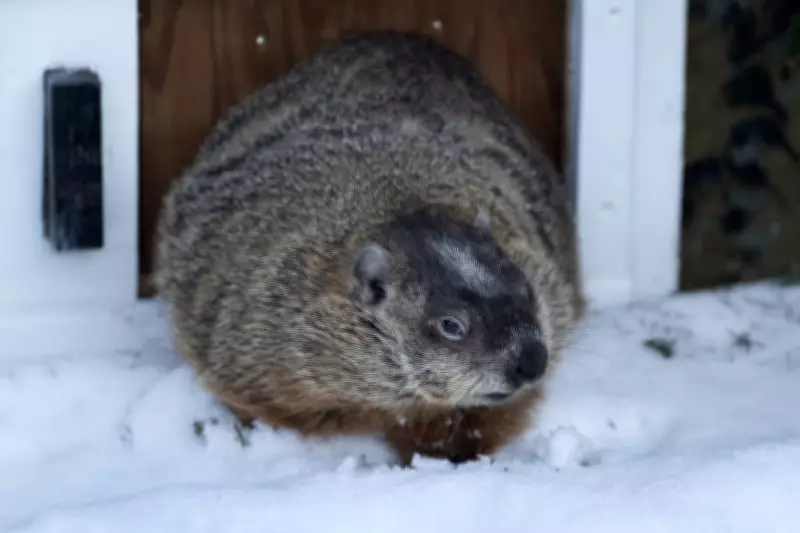
Wiarton Willie Forecasts Early Spring After Shadowless Groundhog Day 2026
In a much-anticipated annual tradition that blends folklore with meteorology, Wiarton Willie, the celebrated albino groundhog from Ontario, did not see his shadow on the morning of February 2, 2026. This outcome, declared officially, signals a prediction of an early spring for Canadians weary of winter's grip.
The Ceremony and Its Significance
The event, held in the small community of Wiarton on the Bruce Peninsula, draws attention from across the nation each year. According to the long-standing Groundhog Day custom, if the rodent emerges from its burrow and fails to see its shadow due to cloudy weather, spring will arrive sooner than later. Conversely, a sighting of its shadow presages six more weeks of winter weather.
This year's prediction comes as a welcome relief to many, especially following recent stretches of extreme cold and snowfall in parts of Canada. The ceremony, often accompanied by festive activities, underscores a unique blend of cultural heritage and public interest in seasonal changes.

Context and Public Reaction
Groundhog Day has its roots in European folklore and was popularized in North America, with Wiarton Willie serving as one of Canada's most recognizable prognosticators since the 1950s. While not scientifically rigorous, the tradition fosters community engagement and offers a light-hearted moment during the depths of winter.
"It's a fun tradition that brings people together," remarked a local attendee, highlighting the event's social appeal. The prediction aligns with some milder weather patterns observed in early 2026, though meteorologists caution that seasonal forecasting remains complex.
Broader Implications and Comparisons
Interestingly, Wiarton Willie's forecast contrasts with that of Punxsutawney Phil in Pennsylvania, who reportedly saw his shadow this year, predicting extended winter conditions in the United States. This divergence often sparks playful comparisons between the two groundhogs and their followers.
In Canada, the prediction may influence public sentiment and planning for spring activities, from agriculture to tourism. Farmers, for instance, might view an early spring as an opportunity for earlier planting, while urban residents could anticipate a sooner thaw for outdoor pursuits.
As Canadians await the actual arrival of warmer temperatures, Wiarton Willie's shadowless moment on Groundhog Day 2026 provides a hopeful glimpse into the changing seasons, rooted in a cherished national tradition.