Montreal's Grand Winter Carnivals of the 1880s: A Historical Perspective
As the 26th annual Montréal en Lumière festival prepares to illuminate the city starting February 27th, contemporary celebrations appear modest when compared to the colossal winter carnivals that captivated Montreal over 150 years ago. The frosty festivities of the 1880s represented an era of ambitious winter celebrations that have never been replicated on such a grand scale.
The Forgotten Winter Spectacles
Unknown to most modern Montrealers, the city staged five magnificent winter carnivals during the 1880s that attracted revelers from across eastern North America and even drew visitors from Europe. These wintertide celebrations represented a pinnacle of civic pride and engineering ambition that transformed Montreal into a winter wonderland of unprecedented proportions.
Unlike today's Montréal en Lumière festival, which primarily centers around the Quartier des Spectacles, the Jack Frost celebrations of the 1880s sprawled across multiple locations throughout the city. The festivities occupied Dominion Square (now Dorchester Square), Champ-de-Mars, Place d'Armes, the slopes of St-Denis and Bleury Streets, the Ste-Catherine Street Cricket Grounds, Mount Royal, and St. Helen's Island, creating a citywide celebration of winter's possibilities.

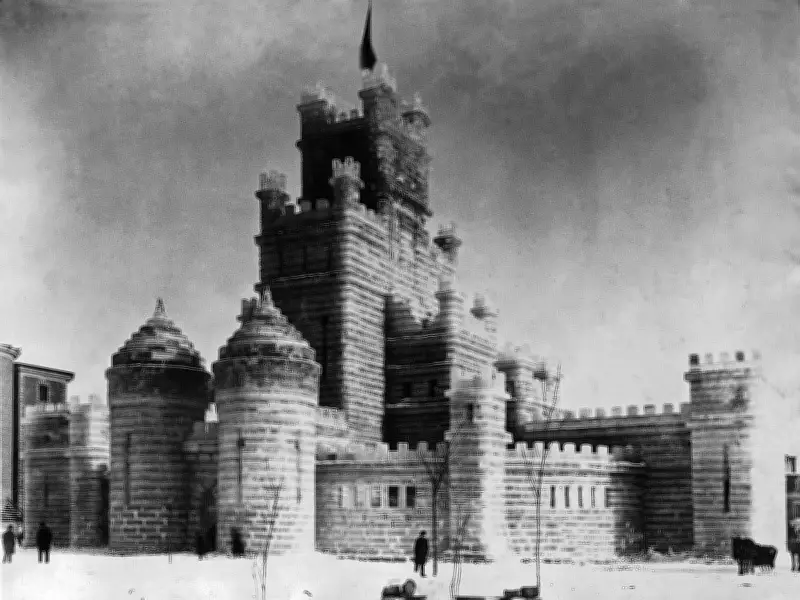
The Ice Palace: A Towering Marvel
The undisputed centerpiece of the 1885 Montreal Winter Carnival was the magnificent ice palace erected on Dominion Square. This imposing frozen castle stood precisely where the South African Boer War monument would later be placed in 1907. The structure remained in place until the spring thaw inevitably claimed it, but during its brief existence, it captured the imagination of an entire city.
The ice palace reached an awe-inspiring height of 97 feet and two inches, standing nearly ten storeys tall. To put this in perspective, the structure was only two storeys shorter than the Beaux-Arts style Dominion Square Building that would be constructed decades later in 1930. The Montreal Witness newspaper captured the public's fascination in its January 24, 1885 edition, describing the ice castle as having "grace of outline, gleaming towers and turrets, ascending in well-balanced proportions, ingenious construction and elegance of entire design."
The Spectacle of the Storming
The weeklong carnival reached its dramatic climax with the highly anticipated storming of the ice palace. On January 28, 1885, at precisely 8 p.m., more than 2,200 snowshoers carrying torches launched a determined assault on the frozen fortress. Only 250 volunteer Montreal city firemen stood guard within the icy structure, tasked with defending the palace in what everyone recognized as a predetermined, theatrical battle.
Dominion Square filled with eager spectators who understood they were witnessing a carefully choreographed spectacle. The inevitable outcome—the taking of the castle—created a memorable winter spectacle that combined athleticism, theater, and community celebration in equal measure.
Additional Architectural Wonders
The 1885 carnival featured additional remarkable ice structures that demonstrated the Victorians' engineering prowess. In Place d'Armes, artisans created a magnificent ice lion measuring thirty feet in total height, with the beast itself stretching an impressive sixteen feet in length. Like the ice palace, this creation benefited from early electric lighting that enhanced its visual impact during evening hours.
Meanwhile, on the Champ-de-Mars, workers constructed the Condora—a conical structure measuring fifty feet in diameter and slightly taller than the ice palace itself. This architectural marvel featured seven landings and eight small turrets, topped by a sixteen-foot snowshoer holding an electric light. The Montreal Witness described the Condora as a "perfect miracle of beauty," capturing the public's admiration for these temporary winter wonders.

Organizational Triumphs and Community Spirit
Research into the 1885 Winter Carnival reveals the enormous logistical challenges organizers faced. From erecting three massive ice structures in unpredictable weather conditions to planning the illustrious carnival ball at the stately Windsor Hotel overlooking Dominion Square, the coordination required was immense. Snowshoe clubs organized competitive tramps around Mount Royal, while workers created an ice "boulevard" stretching from Jacques Cartier Square across the frozen St. Lawrence River to St. Helen's Island.
Contemporary press reports reveal how these monumental undertakings instilled tremendous civic pride among Montrealers of the era, bridging both francophone and anglophone communities. The sentiment parallels what later generations would experience during Expo 67—a shared sense of wonder and civic achievement.
As we consider today's winter celebrations, one cannot help but wonder why our modern frosty festivities seem comparatively modest when measured against the ambitious scale of these 19th-century carnivals. The ice palaces and structures of the 1880s stand as testament to what Montrealers once accomplished through collective vision, engineering ingenuity, and sheer determination to transform winter's challenges into spectacular celebrations.