Groundhog Day 2026: Divergent Predictions from Famous Weather-Prognosticating Rodents
As Canadians emerge from a series of blistering winter storms, the annual Groundhog Day tradition brought both hope and disappointment on February 2, 2026. The nation's most famous weather-predicting groundhogs delivered conflicting forecasts about what lies ahead for the remainder of the winter season.
Wiarton Willie's Optimistic Spring Prediction
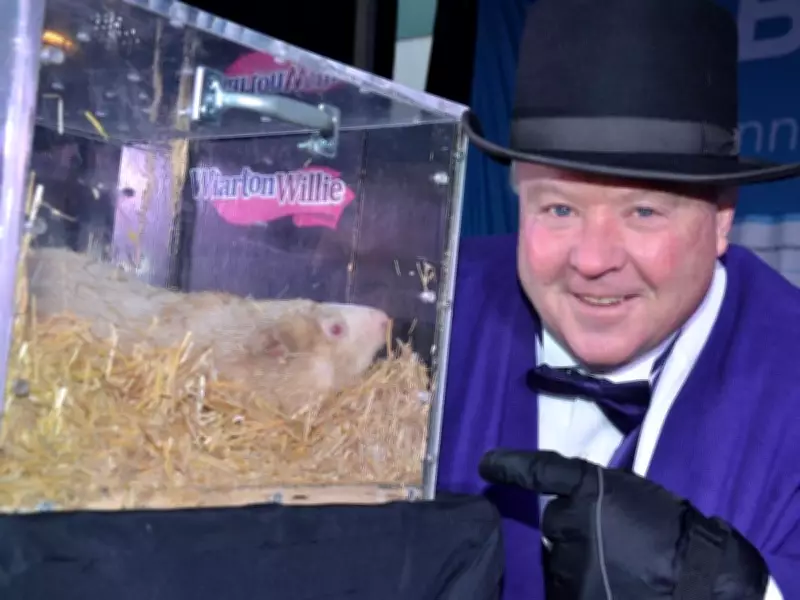
In the chilly -13°C temperatures of Wiarton, Ontario, the albino groundhog emerged from his burrow at precisely 8:07 a.m. to the enthusiastic chants of "Wake up, Willie!" from the gathered crowd. Through South Bruce Peninsula Mayor Jay Kirkland, who served as the groundhog's interpreter, Willie delivered welcome news to winter-weary Canadians.
"Willie told me he's not seen the sun. So everybody knows what that means," announced Mayor Kirkland, prompting the crowd to erupt in cheers of "Early spring!" This prediction follows the traditional Groundhog Day lore: if the groundhog sees his shadow, winter persists for six more weeks; if not, spring arrives early.

This year marks a significant milestone for the Wiarton tradition, as various groundhogs bearing the name Wiarton Willie have been prognosticating weather for an impressive 70 years. According to historical data from the Weather Network, Wiarton Willie has maintained a 29% accuracy rate in predictions since the year 2000.
Punxsutawney Phil's Winter Forecast
Meanwhile, at Gobbler's Knob in Pennsylvania, the legendary Punxsutawney Phil delivered a much less optimistic forecast. Through Tom Dunkel, president of the Groundhog Club's Inner Circle, Phil announced: "I look to the sky and back to you there's a shadow on the ground. There's six more weeks of winter abound."
The disappointed crowd responded with heavy booing at the prospect of continued winter weather, though they followed the announcement with traditional polka dancing. Punxsutawney Phil boasts a much longer history than his Canadian counterpart, having made seasonal predictions since 1886. According to the National Oceanic and Atmospheric Administration, Phil maintains a success rate between 35% and 40%.
Additional Canadian Groundhog Predictions
The weather-prognosticating phenomenon extends beyond these two famous rodents:
- Fred la Marmotte in Val-d'Espoir, Quebec predicted an early spring, with residents celebrating through singing and dancing during the early morning ceremony.
- Shubenacadie Sam in Nova Scotia was unable to make a prediction this year due to inclement weather conditions.
- According to Groundhog-day.com, North America hosts 88 weather-prognosticating groundhogs, including 14 in Canada and 74 in the United States, plus 51 "alternative" groundhogs.
Unconventional Weather Predictors Join the Fray
In an interesting development, the Toronto Zoo entered the seasonal forecasting arena with Hudson the polar bear. The zoo announced on social media: "Having first investigated the possibility of a late winter, male polar bear Hudson determined, like many of us, that we've had enough of winter with a swipe of a paw."
This unconventional prediction adds to the growing diversity of weather forecasting methods that capture public imagination each February. While scientific accuracy varies among these prognosticators, they continue to serve as beloved cultural traditions that bring communities together during the depths of winter.
As Canadians await the actual arrival of spring, these conflicting predictions from Wiarton Willie and Punxsutawney Phil highlight the uncertain nature of seasonal forecasting and the enduring appeal of these whimsical weather traditions that have captivated North Americans for generations.