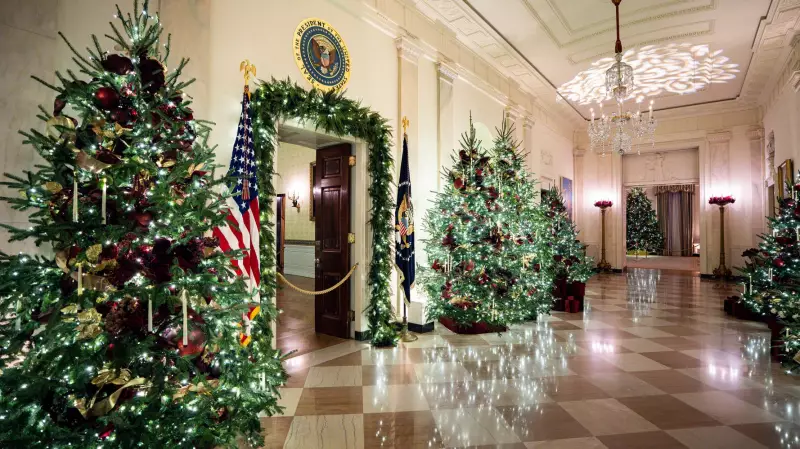
The White House has unveiled its holiday decorations for the 2025 season, setting the stage for a festive period that has quickly become a topic of intense scrutiny and debate. With the theme "Home Is Where The Heart Is," the design features rooms filled with lush greenery and various symbolic motifs, presented through a moody walkthrough video that has already drawn strong reactions from the public and design experts alike.
A Shift in Aesthetic and Tone
Interior designers contacted for analysis noted a clear departure from the holiday decor of previous Trump administration years. Sara Parker, a lighting and furniture designer, observed that past installations were very theatrical and statement-driven, while the 2025 decor feels more nostalgic, sentimental, and whimsical. This marks a stark contrast to the headline-grabbing, blood-red tree corridor of 2018 or the widely ridiculed all-white branch tunnel from 2017, which former First Lady Melania Trump's adviser later suggested she cared little about.
Annie Elliott, another interior designer, bluntly stated, "The best thing I can say about 2025’s holiday decorations is that they’re not 2017’s. That all-white branchy birth canal was a travesty." The restraint shown in 2025 is particularly surprising given President Trump's recent penchant for opulent design, such as heavily gilding the Oval Office and demolishing the East Wing to construct a $300 million ballroom.

Symbolism, Politics, and Mixed Messaging
Within the traditional festive elements, several specific installations have drawn focused attention and criticism. Ornaments featuring the First Lady's "Be Best" anti-cyberbullying campaign slogan appeared on trees, creating an online stir due to the perceived incongruity with the President's frequent use of demeaning language on social media.
Designers also pointed to more jarring inclusions, such as portraits of President Trump. One, constructed from Legos, evokes his mug shot following felony charges related to efforts to overturn the 2020 election. Sarah Boardman, an interior designer, criticized this choice, arguing, "The large-scale inclusion of Trump portraiture... is strange and overwhelms rooms meant to evoke peace, memory or reverence. That choice isn’t holiday symbolism; it’s political theater."
Other attempts at symbolism, like a butterfly tree meant to raise awareness for foster care, were seen by some as potentially superficial. Boardman suggested it risked implying transformation is merely about aesthetics rather than systemic change.
Nostalgia Versus Connection in a Transformed People's House
The overall aesthetic was described by experts as "nostalgia-driven," tapping into a classic, storybook version of an American Christmas with evergreen garlands, red ribbons, and warm lights. Andrew Shoukry of Shouk House compared it to the festive feel of the Plaza Hotel in the film Home Alone, suggesting it aligns with a cultural craving for cozy, familiar tradition.
However, several designers felt this nostalgia failed to foster a genuine sense of warmth or national connection. They contrasted the 2025 decor with the participatory approach of the Biden administration, which featured ornaments made by children from across the United States. Elliott lamented the lack of such inclusive gestures, stating that involving a broad swath of Americans reflects the nation more fully.
The most significant point of contention is the context of the decor's reveal. The historic East Wing, which served as the main public entrance for holiday tours for generations, was demolished in October 2025. With public access dramatically reduced, the walkthrough is now confined to a brief video. Boardman emphasized this shift, saying, "When the spaces shrink, the storytelling shrinks. When imagery shifts from national symbolism to personality worship, it stops being holiday design and becomes messaging."

She and others found the theme "Home Is Where the Heart Is" to be contradictory when access to "The People's House" has been so limited. The decor, they argue, feels staged for filming rather than designed for public experience. Boardman ultimately viewed the installations as "distraction architecture," a soft-focus facade obscuring broader policy actions affecting public accessibility and social safety nets.
While designer Sara Parker expressed appreciation for the more human and less theatrical approach this year, the overarching analysis suggests the 2025 White House holiday decor is less a celebration of shared national tradition and more a curated, politically charged statement delivered during a time of profound physical and symbolic change at 1600 Pennsylvania Avenue.