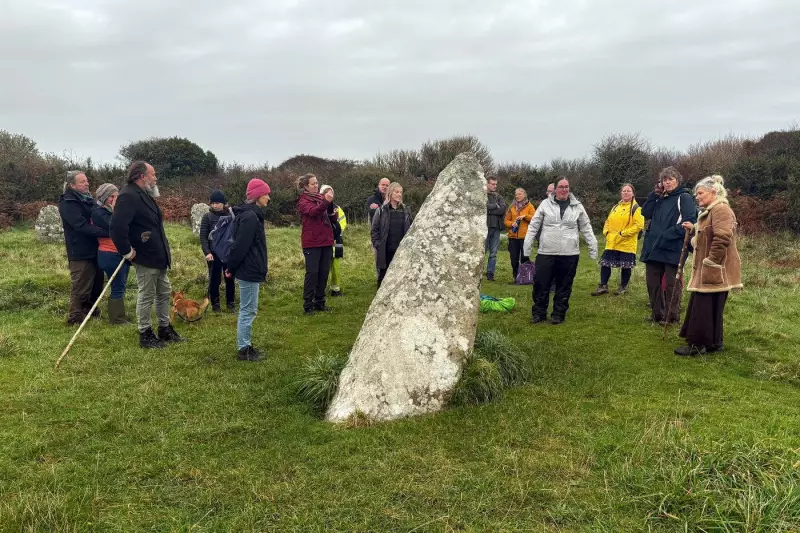
Across the rugged landscape of Cornwall, England, ancient stone circles are experiencing a remarkable resurgence of interest. These millennia-old monuments, long silent witnesses to history, are now becoming focal points for individuals seeking a deeper connection to the past and a sense of the sacred in the modern world.
A Gathering at Boscawen-Ûn
On November 5, 2025, a group of residents from Cornwall gathered at the Boscawen-Ûn stone circle near Penzance. The event was not an archaeological dig but a guided walk, led by Carolyn Kennett, who stood at the center of the circle in a distinctive white jacket. This gathering exemplifies a growing trend where people are visiting these sites not merely as tourists, but as participants in a living landscape, searching for meaning and a tangible link to ancient traditions.
More Than Just Historic Ruins
The renewed fascination with sites like Boscawen-Ûn goes beyond academic curiosity. For many, these stone circles serve as powerful portals to a different perception of time and spirituality. In an era often defined by digital noise and rapid change, the enduring, physical presence of the stones offers a grounding counterpoint. Visitors frequently report feelings of peace, awe, and a profound sense of continuity, suggesting these ancient arrangements still hold a powerful, if intangible, energy for contemporary seekers.

The Enduring Pull of Sacred Geography
This movement highlights a broader cultural shift towards re-engaging with sacred geography and ancestral sites. While the original purposes of the circles—whether ceremonial, astronomical, or social—remain partly shrouded in mystery, their ability to inspire wonder is undiminished. The guided walk in Cornwall is just one example of how local experts and community members are facilitating this reconnection, helping others to see these monuments not as relics, but as relevant touchstones for reflection and spiritual awareness in the 21st century.
The stones of Cornwall and other parts of the U.K. stand as silent yet eloquent teachers. Their renewed popularity underscores a timeless human desire to find the sacred in the physical world, proving that some connections, forged thousands of years ago, are still vibrantly alive today.