Ukrainian Christmas March in Ottawa Celebrates Traditions and Resilience
As frigid temperatures gripped Ottawa on Sunday, January 25, 2026, a group of approximately thirty Ukrainians and their supporters gathered for a meaningful march through the city's downtown core. The event served as both a celebration of traditional Ukrainian Christmas customs and a powerful demonstration of solidarity with those enduring hardship in Ukraine.
A Journey Through Ottawa's Landmarks
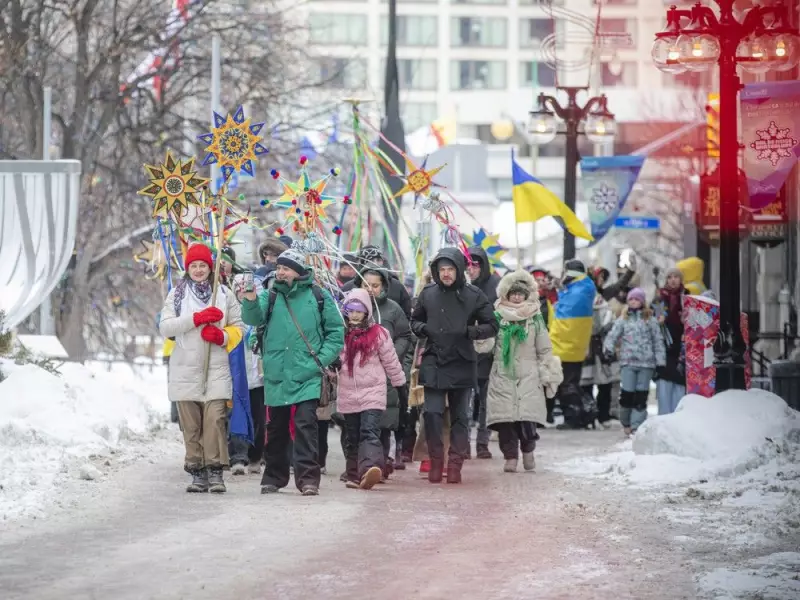
The peaceful, family-friendly procession began at the National War Memorial, proceeded down historic Sparks Street, and culminated at Parliament Hill. Participants carried colorful zvizdas, traditional eight-pointed Christmas stars, and wore symbolic goat masks while singing Ukrainian Christmas carols known as kolyadki.
Many marchers wore traditional Ukrainian garments beneath their winter parkas, while others proudly displayed the bright blue-and-yellow Ukrainian flag draped over their jackets. The visual spectacle created a moving contrast against Ottawa's winter landscape.

Reviving Ancient Traditions in Canadian Winter
Maryna Shum, an Ottawa Ukrainian community member and event organizer, explained the significance of the gathering. "This celebration is a revival of our ancient traditions," she said. "We wanted to gather people and have them come and celebrate with us, and we wanted to share our traditions with all Canadians because they are beautiful."
Shum noted that the event marked the traditional finale of the Christmas season in Ukrainian culture, wrapping up December celebrations and commemorating Christ's birth for the second time according to the Julian calendar.
The Music of Resilience
Among the carols performed was the globally recognized "Carol of the Bells," which originated from the Ukrainian folk song "Shchedryk." Composer Mykola Leontovych first arranged the carol in 1916, and Peter Wilhousky later adapted it into the English version familiar to Canadians today.
Shum described the song's significance: "(The song is) like a small bird, spreading the word about the Christ birth and wishing everyone a good and prosperous life. It's a very kind song."
Solidarity Amidst Conflict
Beyond cultural celebration, the march served as an act of solidarity with Ukrainians facing the ongoing Russian invasion, now in its fourth year. Organizer Khrystyna Stoicheva highlighted the challenges faced by those in Ukraine, where regular blackouts force many to endure winter without consistent heat or electricity.
"It's very cold today, but we are together. Our hearts are open. Our hearts are strong, and our beliefs are strong. This is the resilience of Ukrainian people. No matter what is happening, we are always together. We are united," Stoicheva told reporters.
Strength in Community
Shum emphasized the importance of support from the Ukrainian diaspora in Canada. "Here, right now, it's -15 C, which is almost nothing. ... It's really very difficult to live right now (in Ukraine). But here we are, like one united nation, anywhere, any place. We are Ukrainian and we cherish and support our traditions and our people," she stated.
The Ottawa march successfully blended cultural preservation with contemporary relevance, demonstrating how traditional celebrations can adapt to new contexts while maintaining their core meaning. Through carols, symbols, and shared purpose, participants created a memorable winter event that honored both heritage and human resilience.