Three major European pilgrimage itineraries, certified by the Council of Europe, converge in the Lazio region on their way to Rome. These routes form the heart of the "Antichi Cammini d'Italia" project, which aims to enhance Italy's historic and religious walking paths and position the country as a leading global walking destination.
The Three Routes
The Via Francigena, the Via Romea Germanica, and the Romea Strata each originate from different European directions but share the same final destination: Rome. All three are recognized as Cultural Routes of the Council of Europe, with the Via Francigena certified since 1994, the Via Romea Germanica since 2020, and the Romea Strata since June 17, 2025. Together, they trace the historical pilgrimage flows that have guided travelers from northern, eastern, and western Europe to Rome for centuries.
Via Francigena
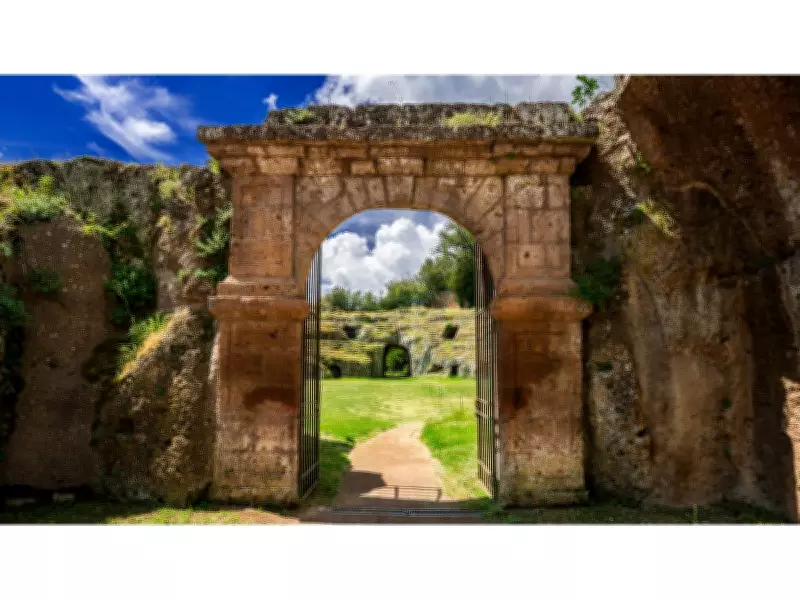
The Via Francigena is Italy's most internationally renowned walking route. It follows the travel diary of Sigeric, Archbishop of Canterbury, who in 990 CE recorded the 79 stages of his return journey from Rome. The Italian section spans approximately 1,000 kilometers in 45 stages. In Lazio, it crosses the Tuscia region of Viterbo, passing through Acquapendente on Lake Bolsena, Bolsena (site of the 1263 Eucharistic miracle), Montefiascone with the Rocca dei Papi, Viterbo with its medieval San Pellegrino quarter, Vetralla, Sutri with its Roman amphitheater carved into tufa rock, Campagnano, and La Storta, before reaching St. Peter's Basilica.

Via Romea Germanica
The Via Romea Germanica reconstructs the journey described by Abbot Albert of Stade in the Annales Stadenses of 1236. Its Italian section measures approximately 1,050 kilometers from the Brenner Pass to Rome. In Lazio, it joins the Via Francigena at Montefiascone and shares the crossing of the Tuscia of Viterbo, including Bolsena, Viterbo (home to the UNESCO-recognized Macchina di Santa Rosa), Vetralla, Sutri, and the Veio Regional Park, up to La Storta. A northern variant also touches Civita di Bagnoregio, the famous "dying city" perched on a tufa spur.
Romea Strata
The Romea Strata is the most recently certified Cultural Route, recognized on June 17, 2025. It reconstructs the network of ancient roads that brought pilgrims from central-eastern and Baltic Europe to Rome, covering more than 4,700 kilometers across seven countries, with 245 stages and over fifty UNESCO sites. The main Italian section runs for about 1,000 kilometers in 47 stages, passing through Lazio locations such as Bolsena, Montefiascone, Viterbo, and San Martino al Cimino before reaching Rome. Since 2024, the final stretch has been remapped by volunteers to give the route a distinct identity, no longer rejoining the Via Francigena.