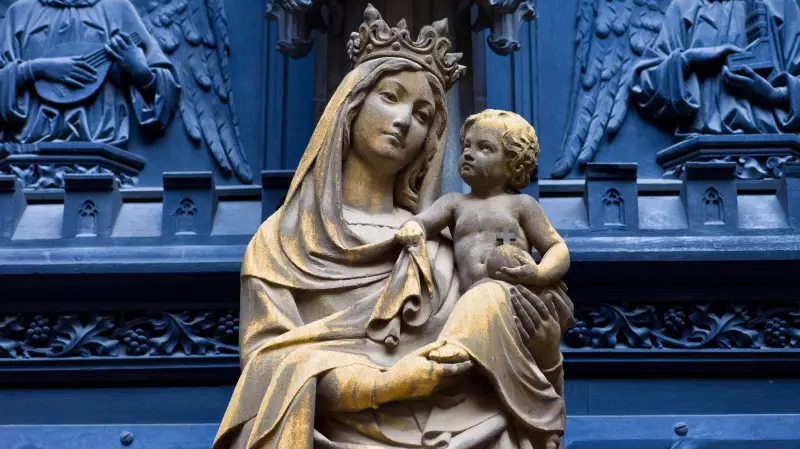
If you've ever watched a TV show or heard a political quip referencing the "Immaculate Conception," you might be surprised to learn there's a high chance it was used incorrectly. This phrase is one of the most commonly misunderstood religious terms in popular discourse, frequently conflated with an entirely different church teaching.
Pop Culture's Persistent Mix-Up
From the halls of McKinley High in "Glee" to the plot of "Jane the Virgin," the term "Immaculate Conception" is often employed as a shorthand for a miraculous, virgin pregnancy. In one notable example, the character Puck reacts to a paternity denial by exclaiming, "Well, call the Vatican. We got ourselves another Immaculate Conception!" Similarly, reviewers have described "Jane the Virgin" as a modern take on the concept. However, these references perpetuate a significant factual error.
Virgin Birth vs. Immaculate Conception: Defining the Doctrines
The confusion stems from mixing up two distinct Catholic beliefs. The Virgin Birth of Jesus refers to the teaching that Mary conceived Jesus without having sexual relations. As explained by Rev. James Martin, a Jesuit priest and author, "His birth is miraculous because Mary conceived a child without having sexual relations with a man."

In contrast, the Immaculate Conception pertains not to Jesus, but to his mother, Mary. This dogma, solemnly defined by Pope Pius IX in 1854, holds that Mary was conceived in her mother Saint Anne's womb without the stain of original sin. The papal proclamation states she was "preserved immune from all stain of original sin" from the very first moment of her conception, through the grace of God.
Why the Confusion Persists
According to Father Martin, the mix-up is understandable. "Both of these beliefs have to do with conception. But in one case it’s Mary’s being conceived without sin, and in another Jesus’s being conceived without Mary’s having had sexual relations," he notes. The confusion is compounded by the liturgy; the Gospel reading on the Feast of the Immaculate Conception is the Annunciation story, where the Angel Gabriel tells Mary she will bear Jesus. "That really confuses people," Martin adds.
The concepts are, of course, theologically linked. The belief that Mary was born without original sin connects to her role as the mother of Jesus. "Both have to do with conception of course, but also the workings of God’s grace," Martin explains. Despite this connection, the distinction is crucial. Martin emphasizes that while the Immaculate Conception is an infallible dogma, it remains "one of the most misunderstood doctrines among Catholics."
So, the next time you encounter "Immaculate Conception" in a show, movie, or conversation, you'll know the truth. It's not about the virgin birth of Jesus, but about the sinless conception of Mary herself—a key distinction that much of pop culture has yet to grasp.