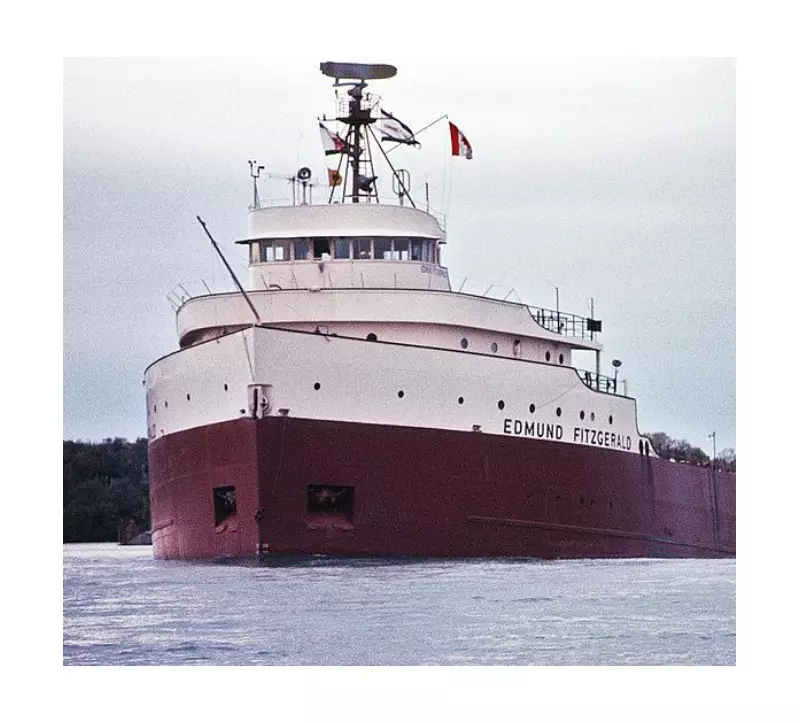
Fifty years ago, one of the most devastating maritime disasters in Great Lakes history occurred when the SS Edmund Fitzgerald, a colossal ore carrier known as the 'Queen of the Lakes,' vanished into the depths of Lake Superior during a ferocious November storm.
The Final Voyage of a Legend
On November 9, 1975, the SS Edmund Fitzgerald departed Superior, Wisconsin, loaded with approximately 24,000 tonnes of taconite pellets. Its destination was Zug Island near Detroit. For 17 years, the Fitz had been a workhorse, completing 748 round trips across the Great Lakes, a distance equating to 44 global circumnavigations.
Commanded by the experienced Captain Ernest McSorley, the ship carried 29 seasoned crew members. That same day, a seemingly routine low-pressure system began developing over the Great Plains. Initially dismissed as another fall storm, it would rapidly intensify into a monster.

A Storm of Unprecedented Fury
By the evening of November 9, the storm had moved northeast, gathering terrifying strength over Lake Superior. The U.S. Weather Service reported it underwent its most rapid intensification. Gale warnings were upgraded to storm warnings, and ships began reporting waves reaching over 10 metres in height, accompanied by hurricane-force winds.
The Fitzgerald, travelling alongside the SS Arthur M. Anderson, altered its course northward seeking shelter along the Ontario shore. Radio communications between the two ships would later paint a picture of a desperate struggle for survival.
At 3:30 p.m. on November 10, Captain McSorley radioed the Anderson to report significant damage. "I have sustained some topside damage," he said. "I have a fence rail laid down, two vents lost or damaged, and a list." He confirmed both pumps were running as he requested the Anderson stay with them until they reached the safety of Whitefish Bay.
The Ship That Never Reappeared
The situation continued to deteriorate. By 4:10 p.m., the Fitzgerald's radar was disabled, and it requested navigation assistance from the Anderson. In its final communication with another vessel, the Avafors, a crew member reported, "I have a bad list, lost both radars. And am taking heavy seas over the deck. One of the worst seas I’ve ever been in."
The last radio contact with the Fitzgerald occurred at 7:10 p.m. with the Anderson. When asked how they were managing, McSorley replied, "We are holding our own." Shortly after, the Fitzgerald entered a squall and vanished from radar. It never reappeared.
Sometime between 7:20 and 7:30 p.m. on November 10, 1975, the SS Edmund Fitzgerald sank approximately 17 nautical miles from Whitefish Point, Michigan. There were no survivors. The Arthur M. Anderson, itself battered by the same massive waves, bravely turned back into the storm to search for their fellow sailors, finding only an oil slick and debris.
Legacy of the Great Lakes Queen
Launched in 1958 and named after the chairman of its owning company, the Fitzgerald was once celebrated as the largest and fastest ore carrier on the lakes. For years, it shattered cargo records. However, a series of incidents in its later years, including running aground and collisions, had preceded its final tragedy.
The sinking of the Edmund Fitzgerald was immortalized in Canadian folk singer Gordon Lightfoot's haunting 1976 ballad, "The Wreck of the Edmund Fitzgerald," which seared the event into the continental consciousness. The cause of the sinking remains debated among maritime experts, with theories ranging from massive waves causing a sudden breach to the ship bottoming out on a shoal.
Fifty years later, the story of the Fitz and its 29 lost souls continues to be a sombre reminder of the immense power of the Great Lakes and the perils faced by those who work upon them.