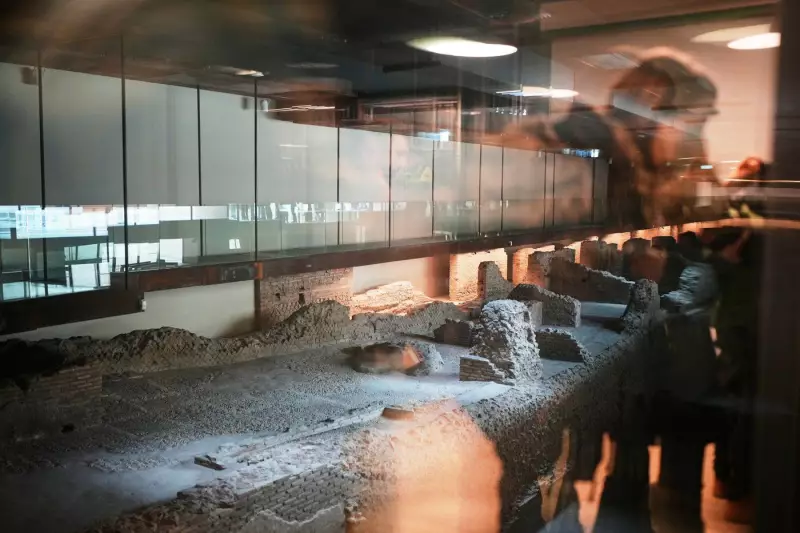
Rome has officially opened a highly anticipated new subway station near the Colosseum, transforming a major transit hub into an underground museum showcasing archaeological treasures discovered during its construction.
A Station Built on History
The new Porta Metronia station, part of Rome's Metro C line, opened to the public on Tuesday, December 16, 2025. Its design was fundamentally altered to incorporate and display the significant historical finds unearthed by construction crews. Instead of removing the artifacts, engineers and archaeologists worked together to integrate them into the station's very fabric.
Among the most notable features are the remains of Roman barracks dating back to the 2nd century AD, built under the rule of Emperor Trajan. These structural foundations are now permanently visible to commuters and tourists, presented with informative displays that explain their historical context.

Archaeology Meets Modern Infrastructure
The project represents a modern approach to urban development in a city layered with ancient history. Construction on new subway lines in Rome often halts for archaeological digs, but the Porta Metronia station sets a new precedent by making the finds a central part of the finished space.
The station is located a short distance from the iconic Colosseum, one of the world's most visited ancient monuments. It is expected to alleviate tourist congestion in the area while offering a unique cultural experience the moment travelers step off the train. The displays include a variety of artifacts—from pottery and tools to architectural elements—that paint a picture of daily life in ancient Rome.
A New Model for Historic Cities
The inauguration of the station marks the culmination of years of complex work balancing 21st-century infrastructure needs with the imperative to preserve the past. Officials have hailed it as a successful model that other historic cities around the globe could follow.
For visitors, the station is no longer just a point of transit but a destination in itself, offering a free, public glimpse into Rome's subterranean history. It underscores the city's identity where every new excavation has the potential to rewrite history, and now, that history is on permanent display for all to see.