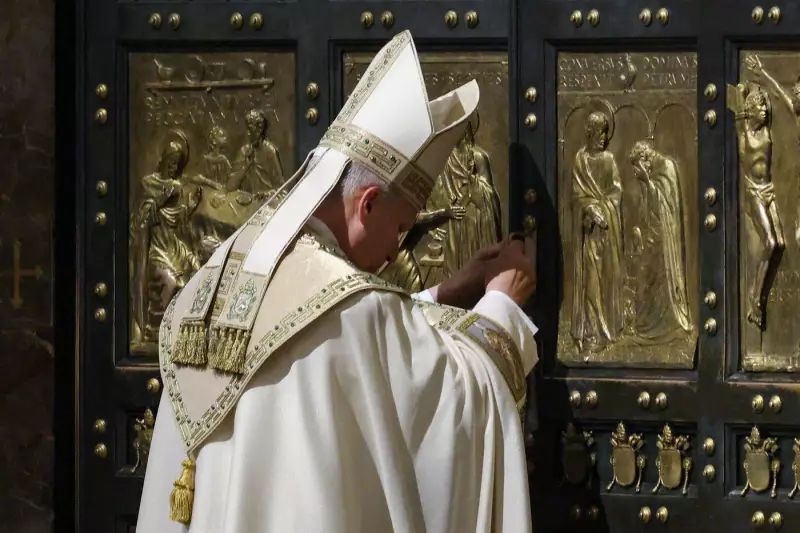
Pope Leo XIV formally brought the 2025 ordinary Jubilee year to a close on Tuesday, January 6, 2026, with a solemn ceremony and a pointed critique of contemporary societal ills. The Pontiff sealed the Holy Door of St. Peter's Basilica, marking the end of the spiritual period, but not before addressing what he termed the "modern plagues" of rampant consumerism and growing xenophobia.
A Solemn Ceremony at St. Peter's Basilica
The ritual closing of the Holy Door is a centuries-old tradition symbolizing the conclusion of a Holy Year, a time of pilgrimage, mercy, and forgiveness. On January 6, 2025, Pope Leo XIV presided over this significant event within the Vatican. The visual record of the moment, captured by photographer Yara Nardi, shows the Pontiff engaged in the sacred act, a powerful image disseminated worldwide.
Pontiff's Message: A Warning Against Modern "Plagues"
In his address accompanying the ceremony, Pope Leo XIV moved beyond ritual to deliver a substantive social commentary. He identified two pervasive threats to human solidarity and spiritual well-being in the modern age. The first, consumerism, was described as a hollow pursuit that places material acquisition above human dignity and community. The Pontiff argued that this mindset leads to spiritual emptiness and a disregard for the poor and vulnerable.

Secondly, he issued a firm condemnation of xenophobia, the fear or hatred of foreigners. Pope Leo XIV emphasized that building walls, both physical and in the heart, contradicts the fundamental Christian call to welcome the stranger and see the face of Christ in every person. His message served as a direct challenge to rising nationalist and isolationist sentiments observed in many parts of the globe.
The Significance and Lasting Impact
The 2025 Jubilee Year, now concluded, was designated as a period for Catholics to seek pardon and grace. Pope Leo XIV's closing remarks, however, framed the journey of faith as one that must extend beyond personal piety into social conscience. By linking the traditional themes of mercy and pilgrimage to a critique of consumer culture and exclusionary politics, the Pope positioned the Church's teachings as directly relevant to current global tensions.
The ceremony on January 6th thus served a dual purpose: it was both the liturgical end of a holy period and a launching point for the Pontiff's continued advocacy for a more compassionate and less materialistic world. His words are expected to resonate within the Church's social doctrine and in broader interfaith dialogues concerning ethics in a globalized society.