Groundbreaking Discovery in Indonesian Cave Art
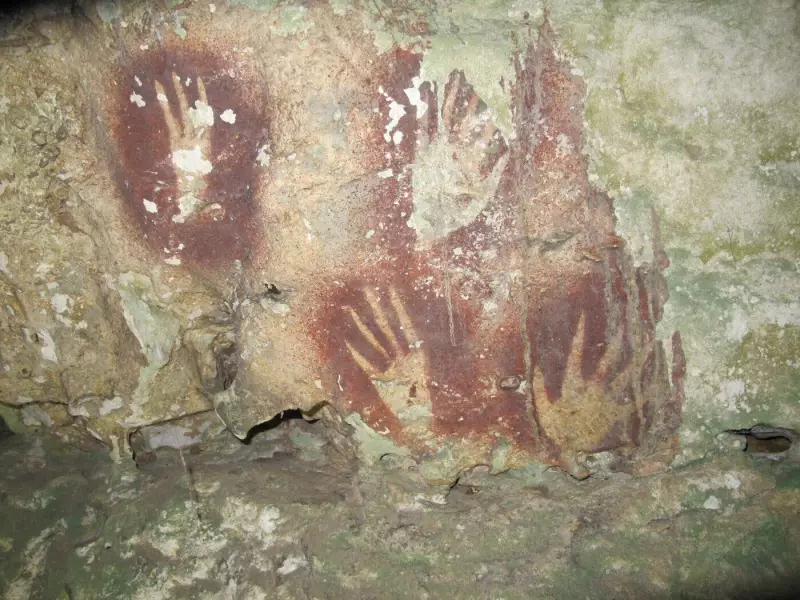
Archaeologists have made a remarkable discovery in the Maros region of Sulawesi, Indonesia, unearthing what is now considered the world's oldest known cave art. The findings, which include distinctive handprints with sharpened fingertips, push back our understanding of early human artistic expression by tens of thousands of years.
Unveiling Ancient Artistic Expression
The handprints, captured in an undated image provided by researcher Maxime Aubert, reveal intricate details that have captivated the scientific community. These ancient impressions, created by early human inhabitants of the region, display a sophisticated technique involving the modification of fingertips to create unique patterns. The discovery challenges previous assumptions about the timeline of human artistic development and provides crucial insights into the cognitive abilities of our ancestors.
Significance of the Maros Region Findings
The Maros region of Sulawesi has long been recognized as an important archaeological site, but this latest discovery elevates its significance to unprecedented levels. The handprints represent more than mere markings; they serve as tangible connections to early human communities that inhabited the Indonesian archipelago. Researchers believe these artistic expressions may have held cultural, spiritual, or communicative purposes that we are only beginning to understand.

This discovery fundamentally alters our perspective on human history, demonstrating that artistic expression emerged much earlier than previously documented in other parts of the world. The Indonesian cave art predates similar findings in Europe by a considerable margin, suggesting that Southeast Asia played a crucial role in the development of early human culture and symbolism.
Scientific Implications and Future Research
The identification of these handprints as the oldest cave art yet discovered opens new avenues for archaeological research. Scientists will now focus on:
- Precise dating of the artwork using advanced techniques
- Analysis of the materials used to create the impressions
- Comparative studies with other early human artistic expressions
- Investigation of the cultural context surrounding the creation of these handprints
The preservation of these ancient artworks in the Indonesian caves provides an extraordinary opportunity to study early human behavior and cognitive development. As researchers continue to explore the Maros region, they anticipate discovering additional artworks that may further illuminate the lives and practices of our distant ancestors.
Global Impact on Archaeological Understanding
This discovery has profound implications for the global archaeological community, shifting the focus of early human artistic studies toward Southeast Asia. The Indonesian handprints demonstrate that sophisticated symbolic expression developed independently in multiple regions of the world, challenging Eurocentric narratives about the origins of human creativity.
The findings also highlight the importance of preserving vulnerable archaeological sites in tropical regions, where environmental factors can threaten ancient artworks. As climate change accelerates, protecting these irreplaceable cultural treasures becomes increasingly urgent for understanding our shared human heritage.