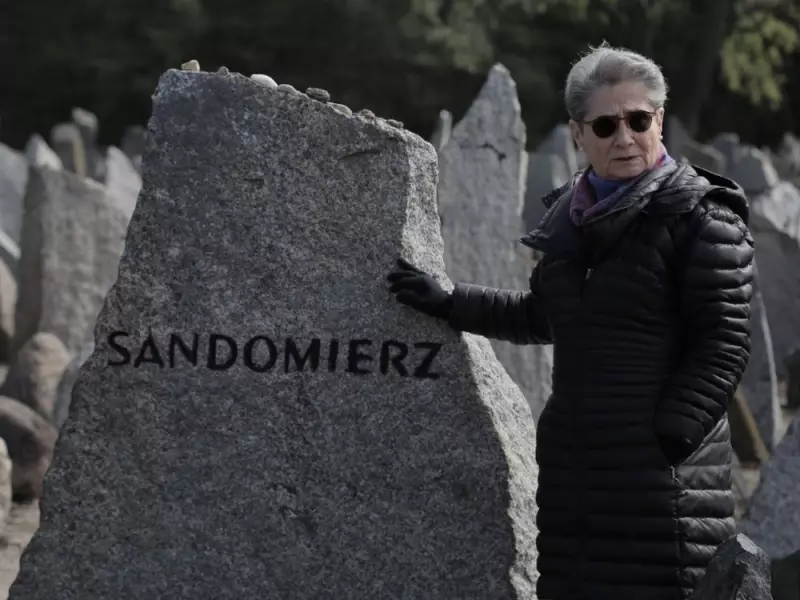
Holocaust Survivor Confronts Rising Antisemitism: A Call for Resilience and Moral Clarity
In the wake of the October 7, 2023 attacks in Israel, the world has witnessed a dramatic shift for Jewish communities globally. Eva Kuper, a Holocaust survivor and educator, shares her profound concerns about the alarming resurgence of antisemitism that has followed these events. The rapid spread of hatred, coupled with public celebrations of violence against Jews, has created a climate of fear and moral ambiguity that echoes darker chapters of history.
A Personal Perspective on Historical Parallels
For Kuper, who survived the Holocaust as a child hidden in a Polish convent by Catholic nuns, the current situation feels unsettlingly familiar. She notes that while she doesn't panic easily, the parallels between today's antisemitic rhetoric and the prelude to the Holocaust are impossible to ignore. What disturbs her most isn't just the hatred itself, but how quickly it has surfaced, how openly it's being expressed, and the apparent lack of moral resistance from broader society.
Antisemitism didn't suddenly reappear; it has always existed beneath the surface, waiting for conditions that allow it to emerge. What has been particularly painful for Kuper is witnessing how quickly initial shock and compassion faded, replaced by a troubling erosion of empathy and even justification of violence against Jewish people.

Standing Proud in the Face of Hostility
Despite increasing hostility toward Jews worldwide, Kuper has responded by embracing her Jewish identity more openly than ever. She continues to attend synagogue and participate in Jewish community events, refusing to let fear dictate how she lives her life. Jewish history teaches us that invisibility does not protect us, she emphasizes. Instead, she points to resilience, strong community bonds, and unwavering moral clarity as the true sources of protection and strength.
As an educator, Kuper struggles with the reality that antisemitism is accelerating once again. Jews represent less than 0.2% of the global population, yet hatred toward this tiny minority continues to grow at a disturbingly familiar pace. She observes that during times of uncertainty, Jewish people are once again being cast as scapegoats—a pattern that has repeated throughout history.
Concerns for Future Generations
Eighty-one years after the Holocaust, Kuper's fears aren't for herself but for the generations that follow. She worries about the difficult choices her children, grandchildren, and great-grandchildren might face:
- Whether to openly reveal their Jewish identity
- Whether to hide Jewish symbols for safety
- How to balance authenticity with personal security
She also expresses concern about Israel's future, noting that external threats are compounded by internal divisions within the Jewish community. A fractured world combined with a fractured Jewish people creates profound uncertainty about what lies ahead.
The Path Forward: Education and Human Connection
While education remains essential in combating antisemitism, Kuper believes facts alone aren't enough. Facts without human connection cannot build genuine empathy. She advocates for creating meaningful opportunities for people from different backgrounds to truly encounter one another as human beings rather than as symbols or labels.
When individuals see beyond stereotypes and recognize shared humanity, something fundamental shifts in how they relate to one another. This human connection, combined with historical awareness and moral courage, represents our best hope for confronting the resurgence of antisemitism and building a more compassionate world.