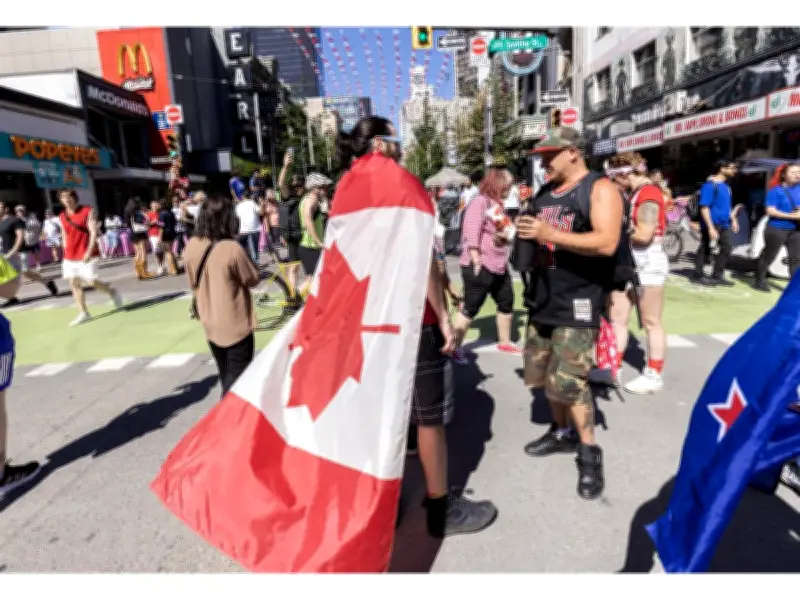
Vancouver's temporary pedestrianization of Granville Street for the 2026 FIFA World Cup has been a resounding success, drawing crowds of residents and tourists who are loving the people-first street, according to urbanist and former Vancouver chief planner Brent Toderian. Writing in the Vancouver Sun, Toderian argues that this transformation should be made permanent, not just a temporary World Cup novelty.
A Street Transformed
Since the World Cup began, Granville Street has been closed to vehicles and filled with people, joy, and energy. Toderian describes it as much more than a vehicle-free zone—it's a great people-place that makes you want to go there and stay. He notes that the street, the neighbourhood, the downtown, and the entire city are better for it.
The transformation echoes the 2010 Winter Olympics, when Toderian first advocated for a pedestrianized Granville Street. Back then, the massive crowds celebrating Team Canada's gold-medal hockey win inspired optimism. “Granville Street will never be the same,” Toderian remembers saying. But momentum fizzled after city hall changed priorities.

Lessons from Montreal
While Vancouver stalled, Montreal became North America's leader in car-free street transformations, adding more blocks and months each summer. Their tourism, civic life, and overall success have seen huge benefits, both measurable and intangible. “In the 'game of cities,' they've been winning. And we've fallen behind,” Toderian writes.
Vancouver has had some successes, like half-block transformations off commercial streets and removing the road cutting through Robson Square, completing architect Arthur Erickson's original vision. But missteps remain, including the poorly received Yew Street closure pilot and the controversial Water Street plan in Gastown.
Tragedy and Urgency
The recent tragedy at the Lapu Lapu Day street festival, where a vehicle killed people, underscores the need for safer street designs. Toderian argues that streets designed for joy must also creatively protect people from vehicles, which can be used as weapons.
He calls for the city to urgently implement the recently passed revitalization plan for Granville Street, including a full summer street opening (not a “road closure”) next year and beyond. “A full summer street opening next year and onward should play a key role in that revitalization, filling the street with clever, magnetic reasons to come and stay,” Toderian writes.
The World Cup as a Catalyst
The World Cup has provided a unique “jet fuel” for pedestrianization, but Toderian insists the street can thrive without it. He envisions a 2026 Granville Street that remains a great public place long after the tournament ends. “If we do it smartly, this can be a turning point,” he concludes.