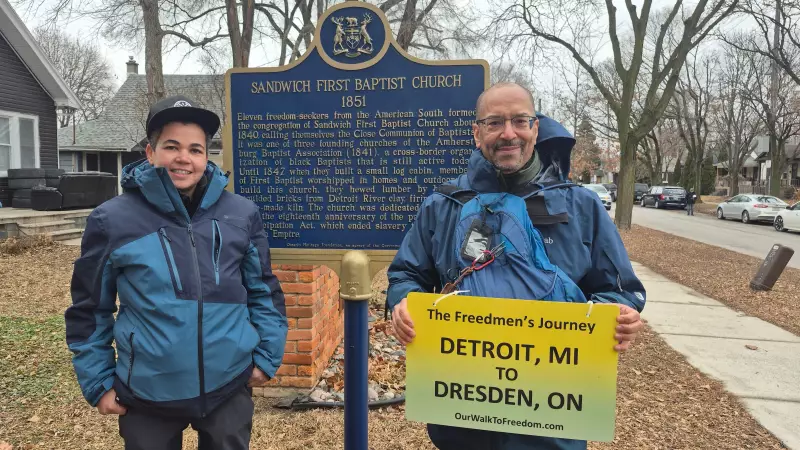
A unique artistic and historical pilgrimage is unfolding in Windsor-Essex, where a practitioner known as a 'Walking Artist' is meticulously retracing the local routes of the legendary Underground Railroad. This profound journey, undertaken as a form of living art and remembrance, connects the present to a pivotal chapter in North American history.
The Journey as Living Art
The project, which began in late December 2025, sees the artist walking the paths once used by freedom seekers escaping slavery in the United States to find sanctuary in Canada. The Windsor-Essex region, with its proximity to the Detroit River, served as a critical terminus for the clandestine network. By physically traversing this landscape, the artist aims to embody the experience, using the act of walking as a primary medium to engage with history, memory, and the land itself.
The artist's method goes beyond simple reenactment. It is a contemplative practice meant to honour the resilience and courage of those who made the perilous journey. Each step is an act of connection, considering the terrain, the distance, and the emotional weight carried by individuals seeking freedom. The timing of the walk, during the holiday season, adds a layer of reflection on themes of hope and new beginnings.

Windsor-Essex: A Historic Gateway to Freedom
The choice of location is deeply significant. Windsor and the surrounding Essex County were among the most important entry points into Canada West (now Ontario) via the Underground Railroad. Communities such as Amherstburg and Sandwich were established as havens. The artist's route highlights these historic areas, drawing attention to local landmarks, riverside crossing points, and the communities that offered support.
This artistic endeavour serves as a powerful reminder of the region's central role in a continent-defining movement for human rights. It underscores how the geography of Southern Ontario is indelibly marked by this history. The walk transforms silent historical markers into a dynamic, sensory experience, inviting public reflection on a legacy that continues to shape Canadian identity.
Context and Contemporary Resonance
The project arrives at a moment of ongoing national and global conversations about freedom, migration, and human rights. By focusing on a physical, slow-travel narrative, the Walking Artist's work contrasts with today's fast-paced digital world, offering a meditative space to consider the arduous paths to liberty.
While the original news report by Sanjay Maru was published on December 28, 2025, the act itself is timeless in its exploration. The work does not seek to replicate the fear or danger of the historical journey but rather to pay homage through presence and perseverance. It stands as a testament to the power of place and the enduring importance of remembering how this corridor became a symbol of hope.
As the artist continues their walk through Windsor-Essex, the project becomes a moving, temporary monument. It highlights how art can be a vessel for history, creating a tangible link between past struggles for freedom and contemporary audiences, ensuring these vital stories remain visceral and relevant for generations to come.