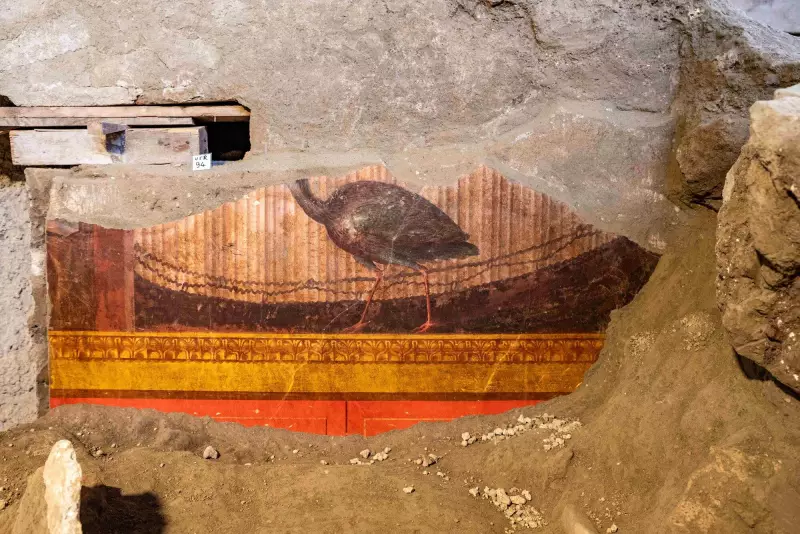
Archaeologists working near the ancient Roman city of Pompeii have made a stunning discovery, unearthing a series of new frescoes described as having "extraordinary details and colours." The vibrant artworks were found in a villa during ongoing excavations.
A Mirror to the Past: The Peahen Fresco
The most notable find is a near-complete fresco of a peahen. The artwork is missing only the bird's head but otherwise remains in a remarkable state of preservation. This discovery is particularly significant because it mirrors a previously uncovered fresco of a peacock found in the same area, suggesting a thematic pairing in the villa's decoration.
The Pompeii Archaeological Park shared the news on social media platform X on December 18, 2025. The announcement highlighted the incredible condition of the pigments and the fine details captured by the ancient artists, offering a vivid window into domestic Roman art and aesthetics.

Unlocking the Secrets of a Buried Villa
The excavation of the villa continues to provide invaluable insights into the lives of Pompeii's residents before the catastrophic eruption of Mount Vesuvius in 79 AD. The preservation of such colourful and detailed frescoes is a direct result of the volcanic ash that buried and sealed the city, creating a unique time capsule.
Each new discovery helps archaeologists piece together the cultural and social fabric of the ancient world. The pairing of the peahen with the previously found peacock may hold symbolic meaning, possibly related to themes of beauty, wealth, or mythology, which experts will now seek to interpret.
A Continuing Legacy of Discovery
This find underscores that Pompeii, one of the world's most extensively studied archaeological sites, still holds many secrets. Ongoing scientific and preservation work continues to yield fresh wonders, captivating historians and the public alike.
The discovery adds another layer to our understanding of Roman artistic techniques and the importance of nature and animals in their domestic decor. It serves as a powerful reminder of the rich cultural heritage preserved beneath the ash for nearly two millennia.