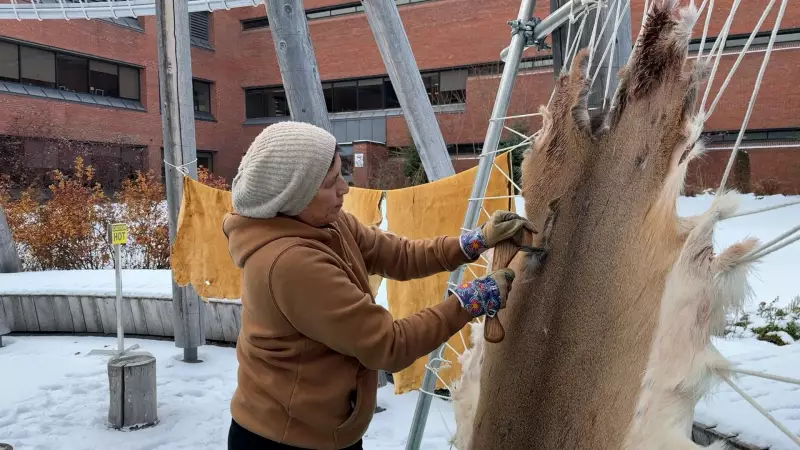
Algonquin College in Ottawa recently became a site for cultural preservation, hosting a unique workshop on traditional Indigenous deer hide tanning. The event, held on December 30, 2025, provided students with hands-on experience in an ancient craft, led by knowledgeable practitioner Tammy Pizendewatch Twashi.
Preserving Ancient Techniques
The workshop offered a rare, practical immersion into the meticulous process of transforming a raw deer hide into soft, usable leather using time-honoured Indigenous methods. Under the guidance of Tammy Pizendewatch Twashi, participants learned each step firsthand. This educational initiative moves beyond textbook learning, allowing students to connect physically and culturally with practices that have sustained Indigenous communities for generations.
A Hands-On Educational Experience
Students were not passive observers but active participants in the tanning process. The workshop emphasized the deep respect for the animal and the environment inherent in these traditional techniques. This experiential learning model aligns with broader educational goals of incorporating Indigenous knowledge systems and practices into college curricula, fostering greater understanding and appreciation.

Cultural Significance and Modern Relevance
Events like this deer hide tanning workshop serve a dual purpose. Primarily, they act as a vital conduit for intergenerational knowledge transfer, ensuring that these skilled arts are not lost. Secondly, they enrich the educational landscape for all students at institutions like Algonquin College. By integrating such workshops, the college supports truth and reconciliation through action, providing a tangible platform for Indigenous cultural expression and education within a mainstream academic setting.
The success of this session highlights a growing trend in Canadian post-secondary institutions to create space for Indigenous ways of knowing. It demonstrates how traditional skills, far from being historical relics, remain relevant as both cultural touchstones and valuable, hands-on learning experiences for a new generation.