Decoding Trump's Signature Baseball Cap: More Than Just Headwear
President Donald Trump's visual identity has become instantly recognizable through his consistent wardrobe choices: the blue or black suit, crisp white shirt, and red tie. This uniform projects an image of business success and authority that dates back to his "Apprentice" days. However, in recent years, a notable addition has frequently appeared alongside this formal attire—a baseball cap that has sparked considerable analysis from fashion and communication experts.
The Disruption of a Carefully Crafted Image
Patti Wood, a body language and nonverbal communication expert and author of "SNAP: Making the Most of First Impressions, Body Language, and Charisma," explains that Trump's standard suit combination serves as a costume designed to elicit perceptions of business success and create an iconic image. "The blue suit, white shirt, and red tie combination creates a bold, easily recognizable silhouette that aligns with traditional symbols of authority and patriotism," adds celebrity stylist and image consultant Edith Chan.
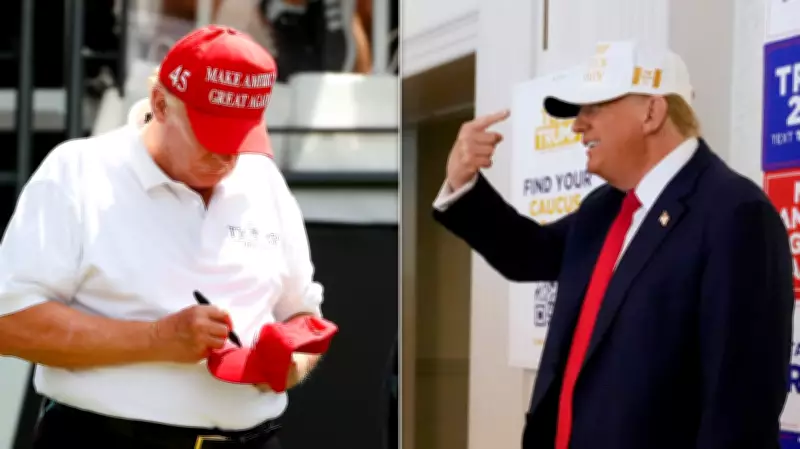
Yet the introduction of the baseball cap represents a deliberate disruption of this affluent, rich-guy fashion statement. Whether it's the bright red "MAGA" hat or the white "USA" version seen during announcements about military actions against Iran, this casual accessory introduces a contrasting element to Trump's otherwise formal presentation.

Psychological and Symbolic Implications
According to Chan, "extremely consistent" sartorial identity represents "a key principle of strong personal branding," but "the addition of the [often] red baseball cap changes the message slightly." She notes that "hats psychologically create a sense of protection and framing around the face, which can make the wearer feel more controlled or shielded in highly visible environments like rallies."
The specific bright red color of Trump's most recognizable hat serves intentional purposes. "The bright red color is intentionally attention-grabbing and communicates energy, urgency and dominance," Chan explains. When slogans like "Make America Great Again" or "USA" appear on these hats, they transform the accessory into "a form of non-verbal communication" that functions "almost like a wearable headline, immediately signaling affiliation and boldness before a word is spoken."
Connecting with the Base Through Fashion
Wood suggests that Trump's adoption of the baseball cap originated from a need to connect with a political base that differs significantly from his own affluent background. "When he was running for president, they had to say 'OK, you know, people see you as this rich guy, and you had been out as a Democrat and now you're trying to appeal to the common person in the Republican party,'" Wood explains. "So what would that look like? Well, it would be a baseball cap, and it would be red for Republican."
This fashion choice creates what Chan describes as a "dual identity" that Trump portrays to his supporters. "Mixing formal and casual elements has become increasingly common in modern style. Fashion today often blends structured tailoring with relaxed pieces to signal relatability and modernity," she notes. "A baseball cap paired with a suit creates a contrast between institutional authority and everyday accessibility."
Contextual Appropriateness and Historical Precedents
Not all political figures have successfully integrated casual headwear into their public image. Chan points to contrasting examples: "John F. Kennedy Jr. was occasionally photographed wearing a baseball cap with tailoring, but those moments were generally informal or street-style situations. In that context, the cap communicated relaxed confidence and modern masculinity rather than political messaging."
Conversely, "former U.K. Conservative Party leader William Hague. In 1997, photographs of him wearing a baseball cap attracted widespread ridicule because it appeared out of sync with expectations of leadership authority. The casual accessory undermined the seriousness people expected from a national political figure."

These examples demonstrate how context significantly influences audience interpretation of styling choices. "In fashion or casual environments, the cap can signal style or ease. In official leadership settings, the same accessory can carry very different symbolic weight," Chan observes.
The Visual Contradiction and Authenticity Questions
Chan explains why Trump's cap-and-suit combination can feel incongruous to some observers: "The off-putting feeling often comes from the fact that the baseball cap originates from sportswear and youth culture, while the suit traditionally signals authority, professionalism and formality. When those two elements are combined, the brain registers a visual contradiction."
Wood identifies particular authenticity concerns when Trump wears the hat during formal announcements or ceremonies. "He's trying to look like the common person. But it doesn't match the rest of it. It's out of alignment, so it doesn't look honest," she says. Wood notes that Trump never wears the hat fully on his head when in a suit—it always sits higher, unlike the utilitarian way he wears golf caps. "My take on it is he probably doesn't want to mess up his hair," she suggests.
Political Wardrobe as Communication Tool
Trump's fashion choices join a long tradition of political leaders using wardrobe to communicate messages. From President George W. Bush's much-maligned "mission accomplished" flight suit moment to President Barack Obama's "let's get to work" rolled-up sleeves, clothing has consistently served as a tool for establishing rapport with audiences.
Wood acknowledges that Trump's hat makes more sense in rally contexts than in formal announcements. "It's something that his fans, when they go hear him speak, they're all wearing. They're matching the uniform, they're saying, 'yes, I'm part of his team and I have the same power and control over my world that he does because I'm with his team.'"
Ultimately, Trump's baseball cap represents more than mere headwear—it functions as a calculated element of political branding that attempts to bridge the gap between formal authority and populist accessibility, though experts question whether this visual contradiction successfully communicates the intended message across all contexts and audiences.