Quentin Tarantino Fires Back at Rosanna Arquette Over N-Word Criticism
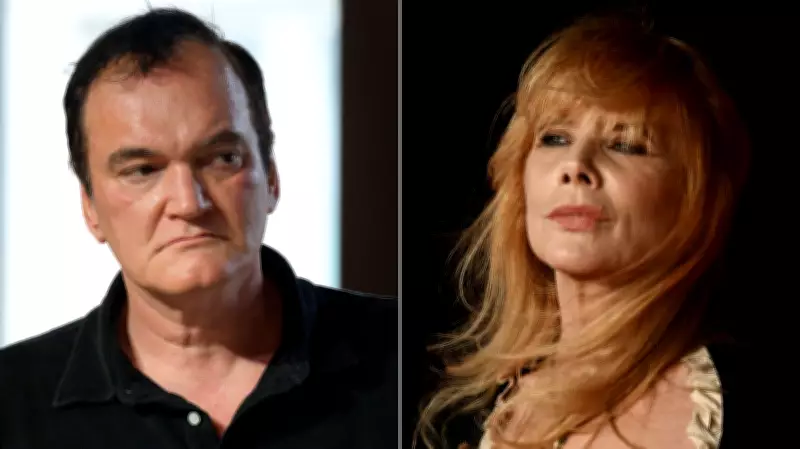
In a dramatic Hollywood feud, acclaimed filmmaker Quentin Tarantino has unleashed a scathing response to actress Rosanna Arquette after she publicly condemned his repeated use of the N-word throughout his filmography. The dispute centers on Arquette's recent comments labeling Tarantino's inclusion of the racial slur as "racist and creepy," sparking a heated exchange that highlights deep divisions over artistic expression and racial sensitivity in cinema.
Arquette's Critique and Tarantino's Fiery Rebuttal
Rosanna Arquette, who played a minor role as the girlfriend of drug dealer Lance in Tarantino's 1994 classic "Pulp Fiction," voiced her disapproval in an interview with The Sunday Times. The 66-year-old actress argued that Tarantino, 62, has been unjustly granted a "hall pass" to use the derogatory term in films such as "Django Unchained," "The Hateful Eight," "Jackie Brown," and "Pulp Fiction." She stated, "Personally I am over the use of the N-word — I hate it. I cannot stand that he has been given a hall pass. It’s not art, it’s just racist and creepy."
Tarantino responded with a blistering statement obtained by multiple media outlets, accusing Arquette of "trashing" "Pulp Fiction" for "very cynical reasons." He wrote, "I hope the publicity you’re getting from 132 different media outlets writing your name and printing your picture was worth disrespecting me and a film I remember quite clearly you were thrilled to be a part of?" The director further criticized her lack of class and honor, noting, "after I gave you a job, and you took the money, to trash it for what I suspect is very cynical reasons, shows a decided lack of class, no less honor." He concluded by questioning the esprit de corps among artistic colleagues, sarcastically adding, "but it would appear the objective was accomplished. Congratulations."

Historical Context and Broader Industry Reactions
This controversy is not new for Tarantino, who has consistently defended his use of the N-word as essential to his characters' authenticity. In "Django Unchained," the 2012 Western that earned five Academy Award nominations, the slur was spoken over 100 times by both white and Black actors, including Jamie Foxx, Leonardo DiCaprio, Samuel L. Jackson, and Christoph Waltz. The film won Oscars for Best Supporting Actor (Waltz) and Best Original Screenplay (Tarantino).
Tarantino has repeatedly stood his ground against critics. At the 2013 Golden Globes, after winning Best Screenplay for "Django Unchained," he told detractors backstage, "They’re saying I should soften it, they’re saying I should lie, they’re saying I should whitewash, they’re saying I should massage. And I never do that when it comes to my characters." In 2022, on "Who’s Talking to Chris Wallace," he defiantly stated, "If you have a problem with my movies, then they aren’t the movies to go see. Apparently, I’m not making them for you."
The debate has drawn mixed reactions from Hollywood figures. Director Spike Lee has condemned Tarantino's use of the term as "disrespectful to my ancestors," while stars like Jamie Foxx and Samuel L. Jackson have supported the filmmaker. Jackson argued that context matters, emphasizing that Tarantino's "characters do talk like that," and Foxx noted its acceptability due to historical accuracy in scripts.
This clash underscores ongoing tensions in the entertainment industry regarding racial language, artistic freedom, and the responsibilities of filmmakers in portraying sensitive themes. As Tarantino and Arquette air their grievances, it reflects broader societal conversations about representation and ethics in modern cinema.