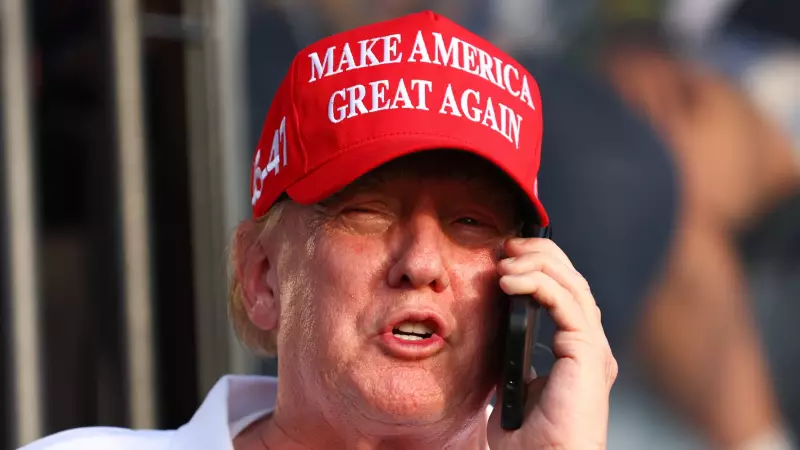
In a revealing conversation on his popular podcast, Joe Rogan pulled back the curtain on former President Donald Trump's distinctive and somewhat theatrical approach to digital communication. According to Rogan, Trump's text messages mirror his larger-than-life public persona in a very specific, tech-savvy way.
The "79-Year-Old Kid" and His Phone
During the Wednesday episode of The Joe Rogan Experience, which featured Nvidia CEO Jensen Huang as a guest, Rogan affectionately characterized the 45th president as a "79-year-old kid." This description set the stage for an anecdote about Trump's personal communication style, which Rogan suggested is "very different" from what the public might anticipate.
The podcast host zeroed in on one particular technological flourish that Trump allegedly enjoys. "He makes the text go big," Rogan explained to Huang, even using hand gestures to mimic the action on a phone screen. He was referring to the animated iMessage effect called Big, which causes words to enlarge dramatically as they appear on the recipient's screen.

A Fitting Quirk for a Caps-Lock Fan
Rogan provided an example of how Trump purportedly employs this feature, citing a message that read, "USA is RESPECTED again," written in all capital letters. The combination of shouting caps and the dynamic text animation struck Rogan as "kind of ridiculous." However, he also implied it was a perfectly fitting digital quirk for a figure known for his grandiose, all-caps social media rants that became a signature of his political career.
The conversation, which took place in 2024, offered a rare glimpse into the informal habits of a former world leader. Rogan's tone was one of amused observation, as he also labeled Trump an "odd guy," reinforcing the notion that the man's private behavior continues to fascinate and defy expectations.
Beyond the Headlines
This insight from Rogan does more than just highlight a peculiar texting preference. It underscores how personal technology habits can reflect broader public personas. For a leader who cultivated an image of unmatched strength and scale, using a feature literally called Big to emphasize his points seems almost poetically consistent.
The anecdote, shared with one of the world's foremost tech executives, bridges the often-separate worlds of politics, media, and personal technology. It reminds audiences that behind the official statements and policy debates, the tools and methods leaders use to communicate—even something as simple as a text message effect—can become a small but telling part of their public story.