Paris Hilton Returns to Capitol Hill, Advocating for Deepfake Legislation After Personal Trauma
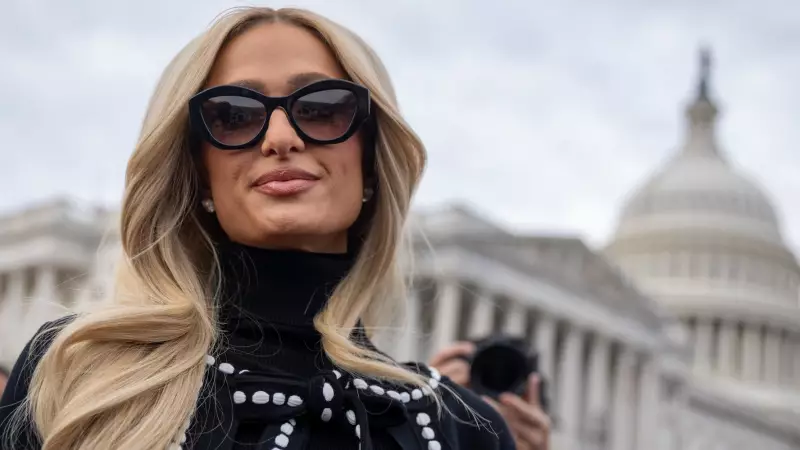
Socialite and media personality Paris Hilton made an emotional return to Capitol Hill on Thursday, revisiting the painful experience of having her private sex tape leaked when she was just 19 years old. Speaking alongside Representatives Alexandria Ocasio-Cortez (D-N.Y.) and Laurel Lee (R-Fla.), Hilton advocated for bipartisan legislation aimed at protecting victims of non-consensual explicit imagery.
The DEFIANCE Act: A Legislative Response
The legislation in question is the Disrupt Explicit Forged Images and Non-Consensual Edits (DEFIANCE) Act, which passed the Senate last week. This groundbreaking bill seeks to empower victims of involuntary, sexually explicit deepfake imagery by allowing them to take legal action against individuals who create, distribute, or solicit such content. Hilton's testimony provided a powerful personal perspective on why such laws are urgently needed.
A Personal Story of Abuse and Exploitation
"When I was 19 years old, a private, intimate video of me was shared with the world without my consent," Hilton told lawmakers. "People called it a scandal. It wasn't. It was abuse." She emphasized that at the time, there were no legal protections for victims like herself, and society lacked even the vocabulary to describe what had been done to her.

Hilton described how the internet was still in its relative infancy in 2004 when her private pain became public entertainment. "People sold my pain for clicks," she recalled, noting that many advised her to "be grateful for the attention" rather than recognizing her as an exploited young woman. Instead of sympathy, she became "a punchline."
The Lasting Impact of Digital Violation
"No one asked me what I lost," Hilton continued emotionally. "I lost control over my body, over my reputation. My sense of safety and self-worth was stolen from me. And I fought hard to get those things back."
According to her 2023 memoir "Paris: The Memoir," Hilton's then-boyfriend Rick Salomon "kept pushing" to privately record their intimate moments. When the footage leaked, Hilton publicly stated she didn't approve its release. Salomon subsequently sued her for defamation, but Hilton successfully countersued for damages. She reportedly never profited from the video and donated her $400,000 settlement to charity.
The New Frontier: AI-Generated Exploitation
Hilton warned that what happened to her two decades ago is now occurring "to millions of women and girls in a new and more terrifying way." She explained that while her exploitation required someone to "betray your trust and steal something real," today's technology means "all it takes is a computer and a stranger's imagination."
The socialite revealed there are now more than 100,000 sexually explicit deepfakes of her circulating online, none created with her consent. "No amount of money or lawyers" can adequately protect victims from this new technological threat, she emphasized.
From Victim to Advocate
Hilton acknowledged her unique position in being able to "reclaim" her story and use her platform for advocacy. Her husband, Carter Reum, attended the hearing to provide moral support. This isn't Hilton's first foray into legislative advocacy—she previously helped pass the Stop Institutional Child Abuse Act, which protects children from mistreatment in what she calls the "troubled teen industry."
"Telling the truth has helped me heal, and I am so proud that today I stand here without shame," Hilton declared. "I will keep telling the truth to protect every woman, every girl, every survivor, now and for the future."
Her testimony represents a significant moment in the ongoing national conversation about digital privacy, consent, and the urgent need for legislation to address the rapidly evolving threat of AI-generated exploitation.