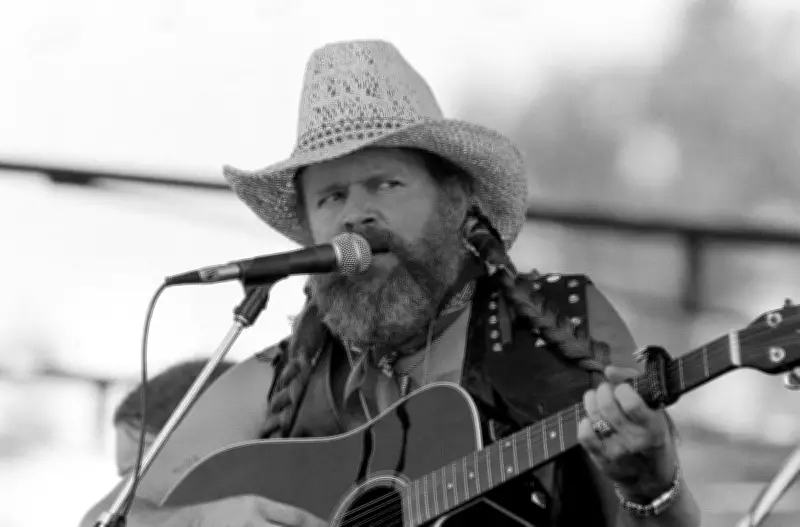
David Allan Coe, the prolific and often controversial singer-songwriter who penned the classic working-man's anthem "Take This Job and Shove It" and numerous other country hits, has died. He was 86.
Coe, known for his long, Willie Nelson-style braids and his outlaw country persona, performed at the Willie Nelson July 4th Picnic in 1983 at Atlanta International Raceway in Hampton, Georgia, as captured in a photo by Rudolph Faircloth. His death was confirmed by family members, though no further details were immediately available.
Early Life and Career
Born in Akron, Ohio, on September 6, 1939, Coe had a troubled youth, spending time in reform school and later in prison. He began writing songs while incarcerated and after his release, he moved to Nashville to pursue a music career. His raw, honest lyrics and rebellious image set him apart from the polished country stars of the era.

Signature Hits
Coe's biggest success came when he wrote "Take This Job and Shove It," which became a number one hit for Johnny Paycheck in 1977. The song resonated with working-class Americans and later inspired a film of the same name. Coe also wrote other hits, including "Would You Lay with Me (In a Field of Stone)" for Tanya Tucker and "The Ride," a song about meeting the ghost of Hank Williams.
Outlaw Legacy
Despite his commercial success, Coe remained an outsider in the country music industry. He was known for his unapologetic lifestyle, which included run-ins with the law and controversial statements. His albums, such as "The Mysterious Rhinestone Cowboy" and "Longhaired Redneck," are considered classics of the outlaw country genre.
Later Years
Coe continued to perform and record into his later years, maintaining a dedicated fan base. He was inducted into the Nashville Songwriters Hall of Fame in 2015. His influence can be heard in the work of many modern country artists who cite him as an inspiration.
Coe is survived by his wife, children, and grandchildren. A private funeral service is planned, with a public memorial to be announced at a later date.