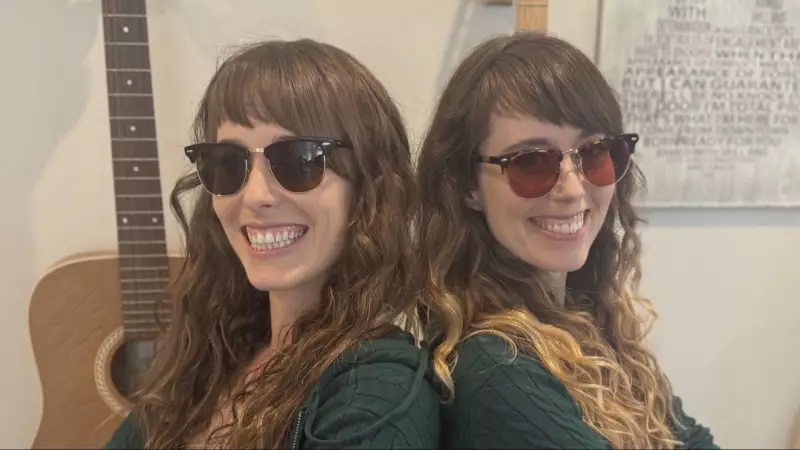
In a story that seems pulled from a movie script, two Canadian women have discovered they are perfect doppelgängers, a revelation so shocking it has even confused their own families. The encounter, described by one woman as an "out of body experience," unfolded after one was contacted by a complete stranger who insisted they looked identical.
The Uncanny Connection
Journalist Adam Sawatsky first reported on this bizarre case on December 04, 2025. The story began when one woman received a message from someone she had never met, claiming they could be twins. Skeptical at first, the two eventually arranged to meet, leading to a moment of mutual astonishment. The resemblance was not merely passing; it was profound enough to cause genuine confusion among their closest relatives.
"It was an out of body experience," one of the women told Sawatsky, attempting to describe the surreal moment of facing her mirror image in another person. The psychological impact of such a discovery is significant, challenging one's sense of individuality and uniqueness.

Families Left Baffled
The ripple effects of this discovery extended directly into their family circles. Reports indicate that even the women's relatives have struggled to tell them apart at times, leading to moments of mistaken identity and bewilderment. This adds a complex social layer to the biological mystery, as the families navigate this unexpected duplication.
While the specific identities and locations of the two Canadian doppelgängers have not been fully disclosed to protect their privacy, the story has captivated a national audience. It raises fascinating questions about genetics, probability, and the strange twists of fate that can connect lives in the most unexpected ways.
A Phenomenon Explained
While discovering a doppelgänger is exceptionally rare, it is not without scientific explanation. Experts suggest that with billions of people on the planet, and a finite number of facial feature combinations, it is statistically possible for two unrelated individuals to share an astonishingly similar appearance. However, for it to occur within the same country, and to such a degree that it stumps family members, is what makes this Canadian case particularly remarkable.
The story, broken by Adam Sawatsky, continues to generate discussion about identity and connection in the modern age, where social media and digital networks make such unlikely meetings more possible than ever before.