Bill Maher Calls on Hollywood Celebrities to Silence Themselves for Democratic Success
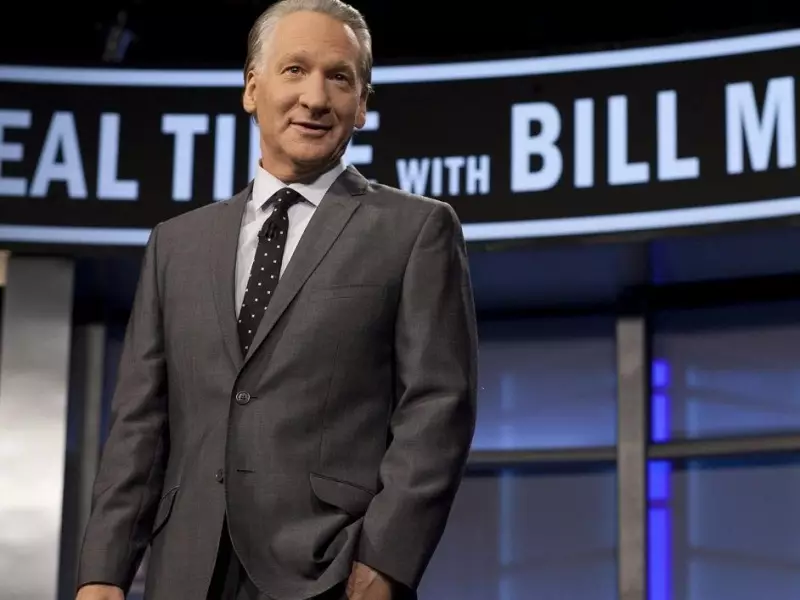
In a bold critique of his own industry, comedian and Real Time host Bill Maher has declared that Hollywood celebrities must "shut up" if Democrats hope to regain electoral momentum. According to a report from the New York Post, Maher believes the entertainment industry's embrace of woke politics is alienating voters across much of the United States.
Maher's Blunt Assessment of Hollywood's Political Role
Maher, a longtime liberal voice and vocal critic of former President Donald Trump, did not mince words in his interview with the California Post. He described Hollywood as "the epicentre of the woke left" and asserted that celebrities are not doing the Democratic Party any favors with their public pronouncements.
"I think if Democrats want to win elections in the future, job one, tell the celebrities to 'Just shut the f— up,'" Maher stated emphatically. "You're not helping. You don't strike people in most of the country as sensible or in touch with reality."

Controversial Stance Earns Hollywood Backlash
Maher's willingness to criticize progressive excesses has positioned him as something of a contrarian within entertainment circles. His HBO special Is Anyone Else Seeing This?, which earned him a Golden Globe nomination for best stand-up comedy performance, takes direct aim at what he perceives as political correctness run amok.
In the special, Maher characterizes universities as "four-year day care for the crybullies of the privileged," demonstrating his broader critique of what he sees as excessive wokeness in American institutions. This perspective recently drew public criticism from fellow comedian Wanda Sykes at the Golden Globes ceremony, where she remarked, "Bill Maher, you give us so much. But I would love a little less."
Advocating for Political Moderation and Centrism
Beyond his Hollywood criticism, Maher has expressed concern about one-party dominance in American politics. Reflecting on California's governance following the 2024 Los Angeles wildfires, he told the Post that "it's not wrong to associate some of the unforced errors our government made with the things normies see as hallmarks of uber-progressive politics."
Maher specifically cited "questionable budget priorities, high taxes that get you nothing, making everything about identity politics, virtue signaling overseas, instead of tending to the nuts and bolts at home" as problematic tendencies. He advocates for a return to centrist policies, arguing that "California could stand for a lot more centrist policies" and that "it's just not a good thing when one party completely controls anything."
Unexpected Dinner with Trump Sparks Controversy
Perhaps most surprisingly, Maher revealed that he shared a dinner with Donald Trump at the White House in March 2025, describing the former president as "gracious" and "measured" in private despite his public persona. This meeting incensed many in Hollywood, with comedian Larry David satirizing it in a New York Times op-ed titled "My Dinner with Adolf."
Maher defended his approach, stating, "My whole personality, unlike a lot of the people out here, isn't just Trump. I don't hate everything. I don't have Trump derangement syndrome. Having said that, there's just a lot of stuff I don't like, and I'm going to call it out."
Broader Cultural Critique of Wokeness in Entertainment
Maher's criticism extends beyond electoral politics to what he perceives as damaging wokeness in entertainment content itself. He joins a growing chorus of voices questioning whether major franchises like Star Wars, Marvel superheroes, and Indiana Jones have prioritized DEI messaging over entertainment value, with some attributing declining box office returns to this shift.
The phenomenon has even been satirized in popular culture, with Comedy Central's South Park creating a 2023 episode that mocked the reported practice of shoehorning progressive themes into beloved franchises. Maher's commentary thus touches on a broader cultural debate about the intersection of entertainment, politics, and commercial success.

As the 2026 political landscape takes shape, Maher's provocative stance raises important questions about the role of celebrity in American politics and whether Hollywood's progressive activism ultimately helps or hinders the causes it seeks to advance.