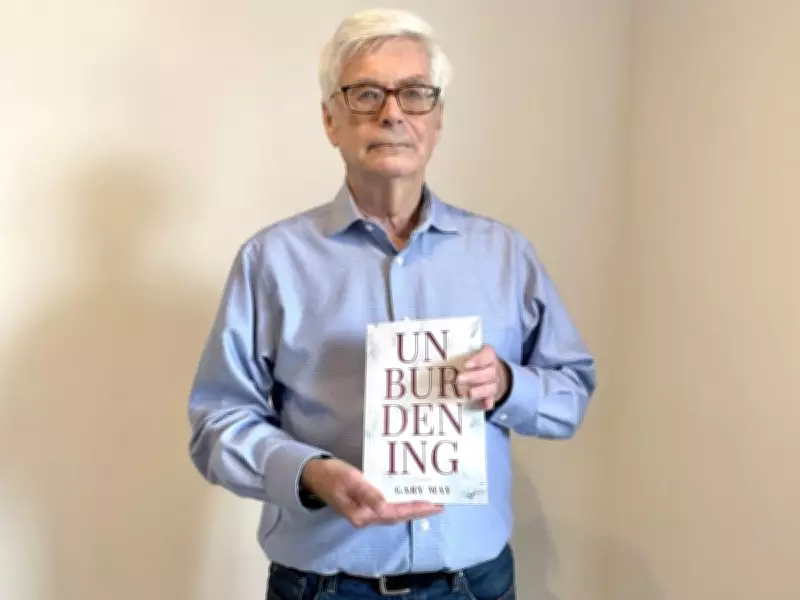
Windsor Author Gary May Honors Ancestors with Multi-Generational Novel 'Unburdening'
Windsor author Gary May has channeled decades of family stories and historical research into his first published novel, Unburdening, a sweeping narrative that pays homage to his southwestern Ontario ancestors. The book, set for wide release in April through Mosaic Press, spans five generations of an Irish immigrant family in Canada.
From Journalistic Roots to Fictional Storytelling
May's journey to fiction writing began unexpectedly during his early journalism career. "The London Free Press sent me to the Sarnia Bureau back in the 1970s when I was a young reporter," May recalled. "I looked at all these refineries and chemical plants and I stupidly said to someone, 'Why is all of this here?'"
That simple question sparked years of research into southwestern Ontario's early oil industry, resulting in several non-fiction books. After three decades as a journalist at the London Free Press and Ottawa Citizen, followed by writing corporate histories, May felt compelled to tell a story from his own perspective.

"I think, because I spent all of those years as a journalist and listening to and reporting on what other people saw and felt, I wanted to be able to write what I saw and felt," May explained during a recent book reading at Villa 92 Eatery & Cultural House in Tecumseh.
Family Stories Around the Kitchen Table
The inspiration for Unburdening came directly from May's family heritage. "This is not my story, but it's inspired by the stories that I heard around the kitchen table at the family farm down in Trenton, Quinte," he revealed.
The novel follows the O'Malley family from their arrival in Canada from Ireland in the mid-nineteenth century through five generations as they establish and maintain a successful apple farm. The narrative culminates in 1980 when a family member, a journalist turned college professor, returns to the family farm to investigate the mysterious circumstances surrounding his mother's death.
Honoring Ancestral Legacy
May's personal connection to this history runs deep. His own family arrived in the Quinte region from Ireland approximately twenty years before the Great Famine that forced millions to flee the country. Though they farmed the land for generations, the property has since passed out of family possession.
"I wanted to remember them, but I also wanted to pay homage, in a sense, to all of our ancestors, all of the people who came from other places," May expressed.
With a mixed ancestry of Scottish, French, English, and Irish heritage, May feels particularly drawn to his Irish roots. The Great Famine of the mid-19th century, with its devastating impact of mass starvation and disease, left a profound impression on him.
"I was constantly taken aback at the cruelty that existed," May said. "That the famine was not something that needed to happen, it was something that was imposed upon the environment, and I guess that probably made me decide that that was going to be the beginning of my story."
However, May adds an intriguing twist to the historical narrative in his novel. "There's a little twist in the story as well. They're not escaping the hunger," he noted about his fictional O'Malley family. "They're escaping something else."
A Personal and Professional Evolution
For May, Unburdening represents both a personal tribute and a professional evolution. After years of documenting others' stories as a journalist and corporate historian, this novel allows him to explore themes of family, legacy, and identity through fiction.
The book serves as a bridge between historical research and personal narrative, weaving together the threads of immigration, agricultural heritage, and intergenerational relationships that define much of southwestern Ontario's cultural fabric.
As Unburdening prepares for its April release, May's work stands as testament to the power of family stories and the enduring connections between past and present in Canadian literature.