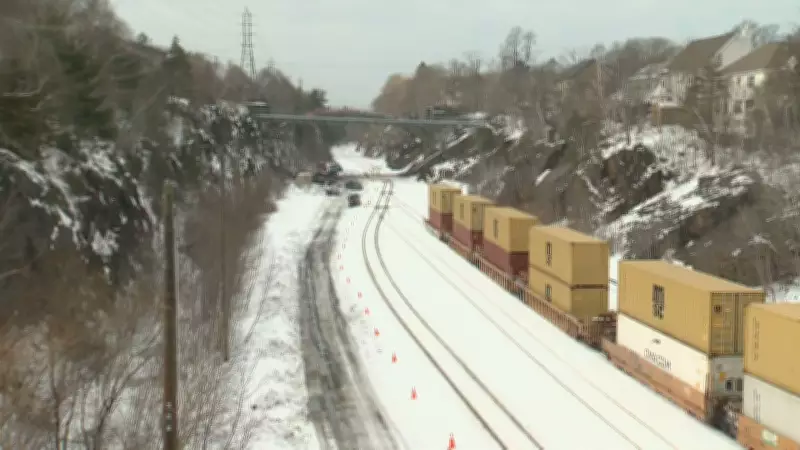
New Book Chronicles the Historic Halifax Rail Cut, a Pivotal City Landmark
A recently released book provides an in-depth exploration of the Halifax Rail Cut, one of Halifax's most historically significant railway lines. This comprehensive work traces the development, operational history, and enduring legacy of this crucial transportation corridor that has shaped the city's south end for generations.
Uncovering Halifax's Railway Heritage
The publication offers readers a detailed account of how the Halifax Rail Cut was conceived, constructed, and integrated into the city's infrastructure. Through meticulous research and archival materials, the authors reconstruct the timeline of this engineering feat that transformed urban mobility in Nova Scotia's capital city.
The book examines how the railway line influenced residential patterns, commercial development, and community dynamics throughout Halifax's evolution. Particular attention is given to the rail cut's role during different historical periods, including its significance during wartime operations and peacetime economic growth.

Architectural and Urban Planning Significance
The publication highlights the engineering challenges overcome during the rail cut's construction, including the excavation through challenging terrain and the innovative solutions implemented by early 20th-century engineers. The book documents how this infrastructure project created new connections between neighborhoods while simultaneously dividing others, creating a complex urban fabric that continues to define Halifax today.
Through photographs, maps, and firsthand accounts, readers gain insight into:
- The original construction techniques and materials used
- The rail cut's impact on property values and land use
- How the railway influenced the development of adjacent communities
- The changing transportation needs that the rail cut addressed over decades
Cultural and Community Impact
The book goes beyond mere infrastructure history to explore how the Halifax Rail Cut became woven into the cultural fabric of the city. It examines how residents interacted with the railway, from daily commutes to community events that developed around stations and crossings.
Particular emphasis is placed on how the rail cut affected social dynamics, creating both physical and psychological boundaries within the city while simultaneously facilitating connections between different areas. The publication includes personal stories from longtime residents whose lives were shaped by the presence of this significant transportation artery.
Preservation and Future Considerations
The concluding sections of the book address contemporary issues surrounding the Halifax Rail Cut, including preservation efforts, adaptive reuse possibilities, and ongoing debates about its role in modern urban planning. The authors consider how this historic infrastructure might be integrated into Halifax's future development while honoring its significant past.
This comprehensive historical account serves as both a documentation of Halifax's transportation heritage and a resource for urban planners, historians, and residents interested in understanding how infrastructure shapes city life across generations.