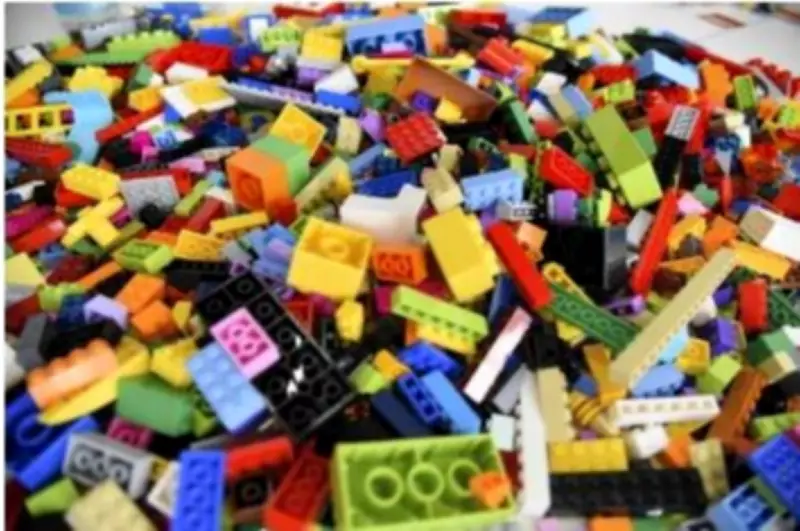
In an era dominated by instant digital gratification and fleeting attention spans, the enduring appeal of simple plastic bricks stands as a remarkable cultural phenomenon. The Lego brand, now synonymous with creative play worldwide, traces its origins to a struggling Danish carpenter's workshop during the Great Depression—a humble beginning that belies its current global stature.
From Economic Despair to Playful Innovation
Ole Kirk Christiansen faced devastation when the global economic collapse of the 1930s reached his workshop in Billund, Denmark. Like countless others during that bleak period, he confronted the fundamental question of survival. His innovative response emerged from an unexpected source: the miniature versions of farm equipment and furniture he had created as design aids.
Christiansen began crafting wooden toys—yo-yos, cars, and airplanes—though profits remained elusive initially. By 1935, he committed fully to toy manufacturing under the name Lego, derived from the Danish words "Leg Godt," meaning "play well." This marked the foundation of what would become one of the world's most recognizable toy brands.

The Plastic Revolution
Following the Second World War, Lego embarked on bold experiments with plastic materials that would ultimately define its identity. Inspired by British firm Kiddicraft's self-locking bricks, Christiansen introduced "Automatic Binding Bricks" in 1949, officially branded as Lego Bricks four years later.
The true breakthrough arrived in the late 1950s when the iconic brick design took its modern form. The introduction of tubes and studs created the crucial "clutch power" that allowed bricks to securely interlock while remaining easily separable. This engineering innovation transformed Lego from simple building blocks into a versatile system limited only by children's imaginations.
Generational Transition and Expansion
After Ole Kirk Christiansen's death in 1958, his son Godtfred Kirk Christiansen assumed leadership and patented the improved brick design. A devastating fire in 1960 prompted the company's complete transition to plastic manufacturing, while a 1961 partnership with Samsonite brought Lego toys to North American markets.
The 1960s witnessed significant innovations including more stable plastic formulations, the introduction of Lego wheels, and comprehensive train systems. In 1968, the first Legoland Park opened in Billund, creating a physical manifestation of the brand's creative philosophy. The following year saw the launch of Duplo bricks—larger, safer versions designed specifically for younger children.
Diversification and Educational Integration
During the 1970s and 1980s, Lego expanded its appeal through targeted product lines. The Lego Homemaker series introduced dollhouses aimed at young girls, while boat and ship sets broadened thematic possibilities. The now-iconic smiling yellow Minifigures debuted, adding character and narrative potential to constructions.
Perhaps most significantly, the establishment of the Educational Products Department positioned Lego as a tool for classroom learning. Teachers began incorporating the bricks into problem-solving lessons, recognizing their potential to develop spatial reasoning, creativity, and engineering concepts.
Timeless Appeal in a Digital Age
The remarkable survival and thriving success of Lego in today's fast-paced, technology-driven world speaks to fundamental human needs that transcend technological trends. In an environment where attention is constantly fragmented across digital platforms, the tactile, focused engagement offered by Lego bricks provides a counterbalance to instant gratification culture.
The brand's journey from Depression-era necessity to global phenomenon demonstrates how simplicity, quality, and creative potential can create enduring value. From its origins in a Danish carpenter's struggle for survival to its current status as an educational tool and cultural icon, Lego's story represents one of the most remarkable transformations in modern consumer history.
Nearly a century after its inception, the humble plastic brick continues to captivate new generations, proving that some innovations achieve timeless relevance by addressing fundamental aspects of human creativity and play.