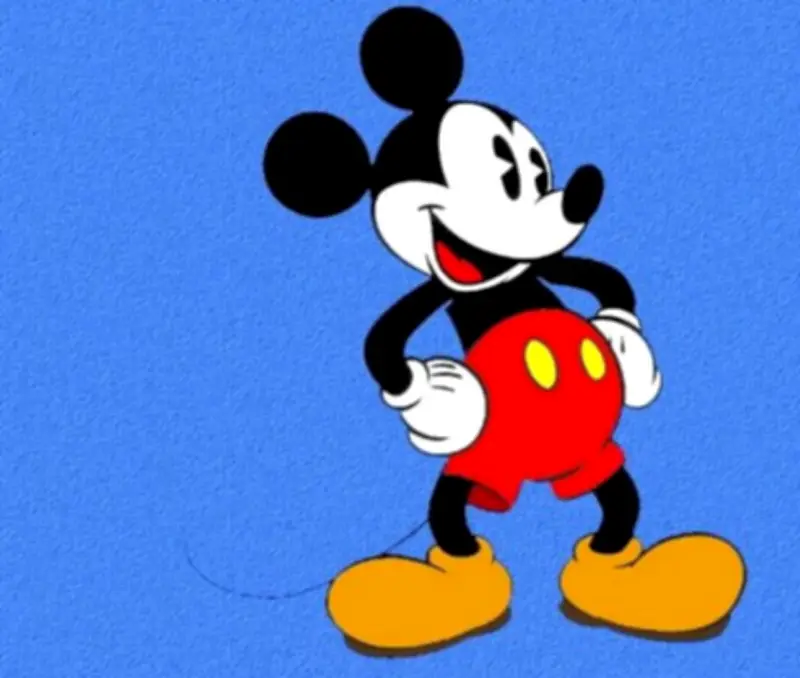
The phrase 'House of Mouse' has become synonymous with the dreamland empire built by Walt Disney, such is the abiding influence of the round-eared anthropomorphic rodent he imagined nearly a century ago. Mickey Mouse has become the standard-bearer for Disneyland since the character's 'Golden Age' in the 1930s.
From a must-have wristwatch — a kids' fantasy object eclipsed only by the Star Wars timepiece in the 1970s — to theme-park mascots, comic strips and children's clubs, Mickey has been the big cheese through every fading fad, marketing gimmick and digital upheaval. He's even enriched our language: where would we be without our 'Mickey Mouse degrees'?
The Origin Story
For all his influence, the planet's most recognizable rodent actually began life as a predecessor to that 'wascally wabbit' Bugs Bunny. What's up with that, doc? Let us explain. In 1927, while under contract with Universal Studios, Walt devised floppy-eared 'Oswald the Lucky Rabbit' but lost the rights to the character in a copyright dispute. Bruised but unbowed, he and creative partner Ub Iwerks went back to the sketch pad and gave us 'Mortimer' the mouse, later changed to 'Mickey.'

First Appearances
Mickey made his first appearance to great acclaim in the November 1928 animation film Steamboat Willie, the first fully synchronized sound cartoon. Newspapers heralded the birth of a 'cartoon star.' For all the glowing headlines, Mickey's actual debut occurred six months earlier, in May 1928, and to considerably less hoopla. In the short film Plane Crazy, Mickey and his girlfriend Minnie — inspired by the pioneering flight of Charles Lindbergh — try to pilot a homemade plane. The character is far from the impish creature we know today. As Britannica has put it: 'This Mickey is rougher, cockier and far less charming — pulling Minnie into a chaotic flight and subjecting her to dizzying stunts as she refuses his romantic gestures.'
Evolution of a Mouse
Mickey was also less cuddly; early incarnations reveal more rat-like features, including a long tail and a long pointy nose, reflecting his puckish personality. Parents were unimpressed, grousing that this mouse was an unsuitable role model for children. The character's appearance was softened over the years to become more childlike, but his engaging antics — echoing the mischievous charms of Charlie Chaplin's 'Little Tramp' — remained, albeit minus the 'insolent attitude.' As the National Museum of American History has pointed out, Disney transformed Mickey into a 'happy, funny, polite and kind-hearted mouse' to whom both kids and parents could venerate as an embodiment of innocence and virtue.
The Man Behind the Mouse
Many stories have been told about the origins of Mickey Mouse — the most widely reported being that it grew out of a three-day transcontinental train trip — but Walt Disney himself, who died in 1966 at age 65, was a famously unreliable source, with some observers describing the rail yarn as just another 'bit of hokum' by a man who well knew the value of publicity. As fellow animator Floyd Norman has said: 'Walt just knew how to tell a story.'